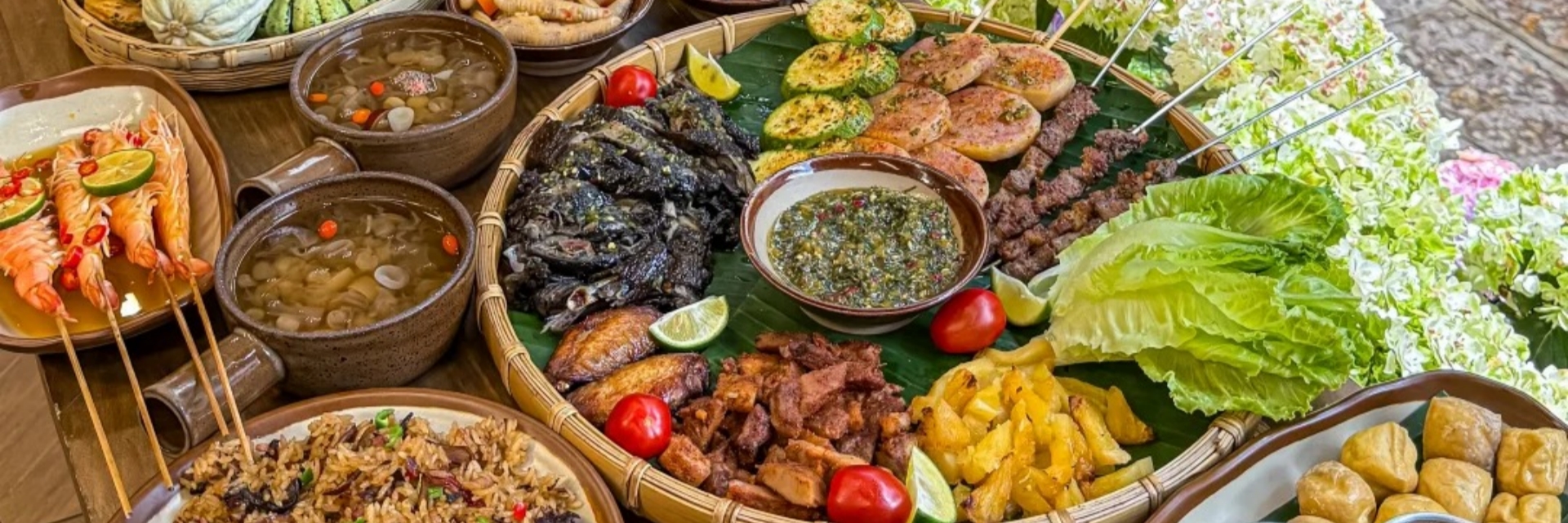
What Is Yunnan Famous Food? Top Dishes You Must to Try
When people think of Chinese food, they often picture Sichuan hot pot, Cantonese dim sum, or Beijing roast duck. But in southwestern China, Yunnan Province offers a completely different culinary experience. Known as Dian cuisine, it blends Han traditions with diverse ethnic influences, creating fresh, flavorful dishes with a balance of sour, spicy, and aromatic tastes.
Whether you are an adventurous eater or someone who prefers mild meals, this guide will show you exactly why Yunnan is a food lover’s dream and which dishes you absolutely must try.
Top Yunnan Famous Food You Must Try
Yunnan’s culinary landscape is dotted with dishes that are not merely meals but cultural institutions, each telling a story of the region’s heritage and natural bounty.
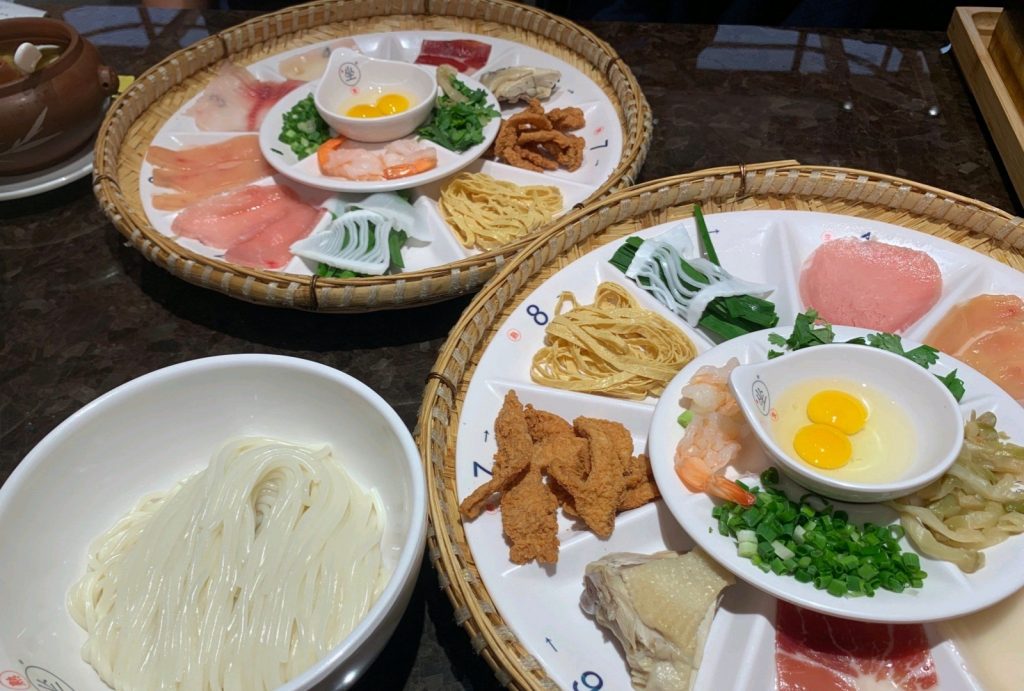
1. Cross-Bridge Rice Noodles (Guòqiáo Mǐxiàn)
This is the most iconic Yunnan dish, especially popular in Kunming. This interactive dish features a scalding hot, rich broth, typically made from pork bones and chicken, served separately from an assortment of raw, thinly-sliced meats (such as chicken, fish, or pork), fresh vegetables, and delicate rice noodles. Diners quickly immerse the ingredients into the piping hot broth, where they cook instantly, preserving their delicate textures and flavors.
2. Wild Mushroom Hot Pot (Yěshēng Jūn Huǒguō)
With over 800 varieties of edible mushrooms, Yunnan truly transforms into a “fungus kingdom” during its rainy season, typically in the summer months. The Wild Mushroom Hot Pot is the premier way to savor this seasonal bounty. A flavorful broth is kept simmering at the table, into which a vast assortment of fresh, wild-picked mushrooms—including highly prized varieties like morels, porcini, and matsutake—are cooked. These mushrooms impart an intense, earthy umami flavor to the soup, creating a deeply aromatic and uniquely Yunnan dining adventure.
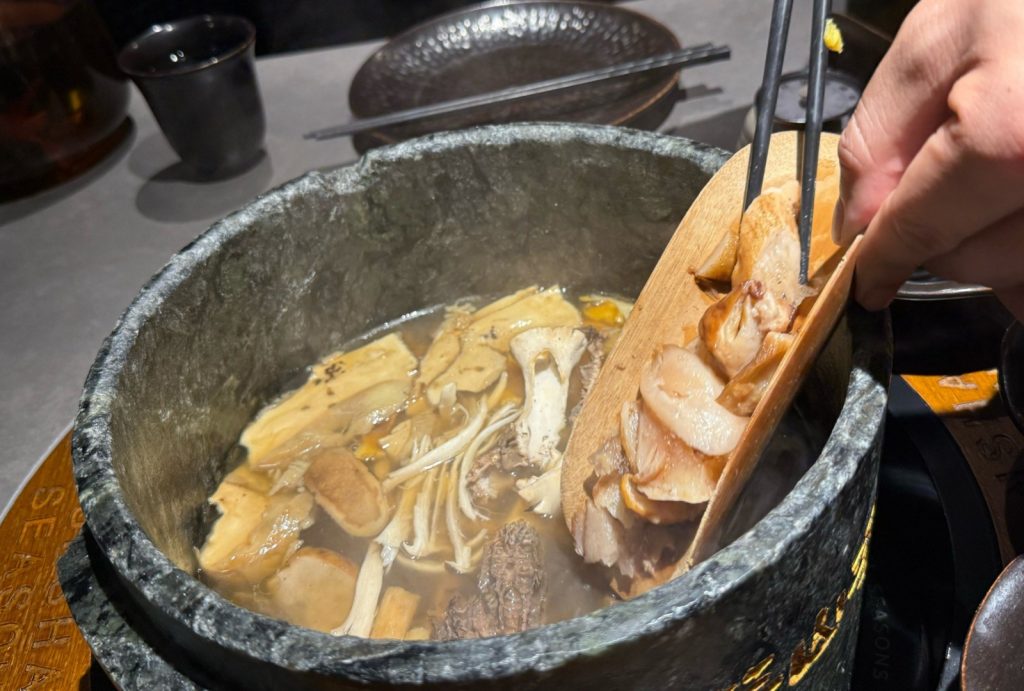
⚠️ A very important local safety tip: The waiter will set a strict 15-20 minute timer to guarantee the wild mushrooms are thoroughly and safely cooked. Keep your chopsticks completely out of the pot until it goes off!
3. Steam Pot Chicken (Qìguō Jī)
If you are traveling with children or seniors who prefer very gentle, non-spicy flavors, Steam Pot Chicken is the perfect choice.
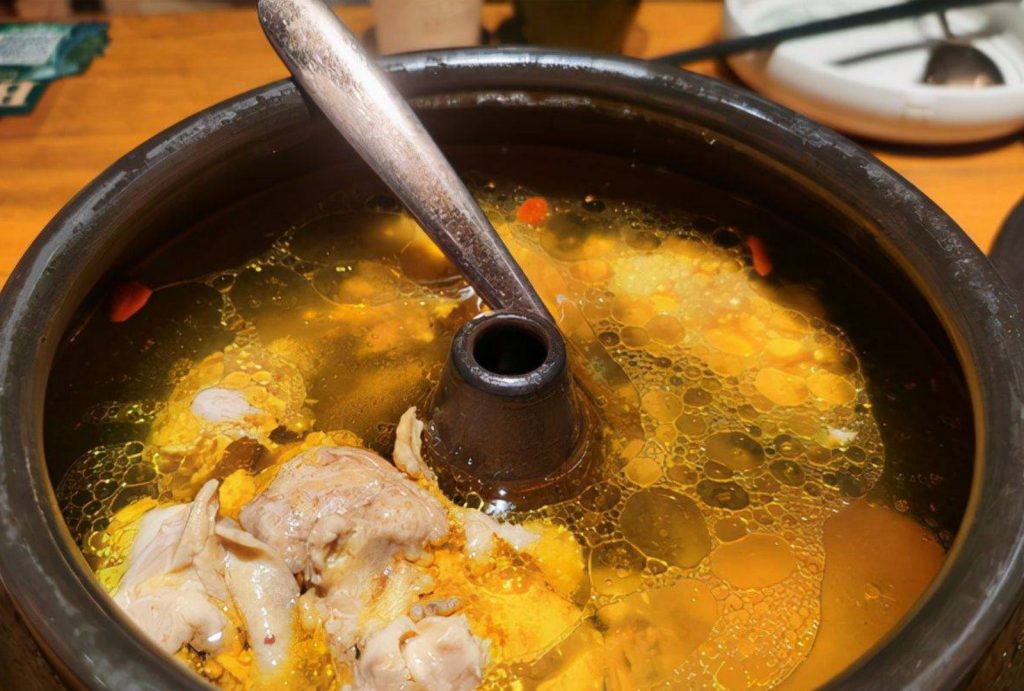
This dish is made using a special, locally crafted clay pot that has a hollow tube rising up in the middle. The chef places chopped chicken, ginger, and local herbs (like goji berries or ginseng) into the pot without any water. The pot is then placed over boiling water, and the steam travels up through the tube, cooking the chicken and creating a rich, pure, and incredibly healthy chicken soup. The meat becomes so tender that it falls right off the bone.
Famous Yunnan Street Food and Snacks
You do not always need to sit down in a big restaurant to taste the best of Yunnan. The streets and night markets are filled with amazing snacks.
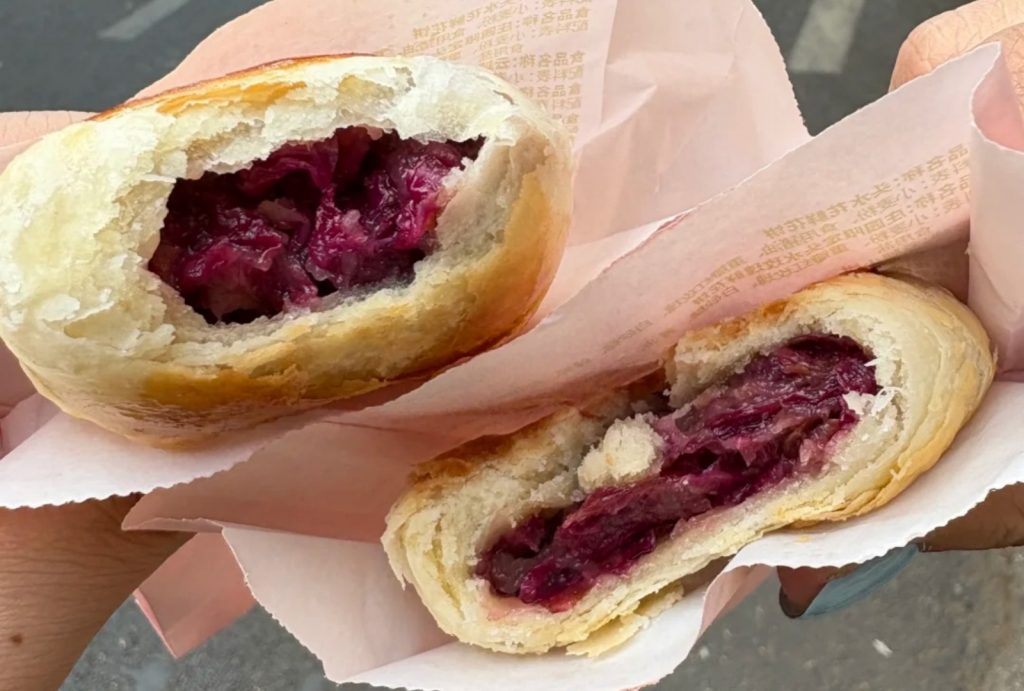
1. Rose Flower Cakes (Xiānhuā Bǐng)
Kunming is famous for its flowers, even baking them right into local pastries. Authentic Yunnan Rose Cakes are simple, flaky, round discs filled with a sweet, fragrant paste made from real rose petals. Don’t confuse them with the elaborate, deep-fried flower pastries of Eastern China! These buttery, aromatic treats are a rustic local staple and the perfect edible souvenir to bring home.
2. Yunnan Rice Cakes (Ěr Kuài)
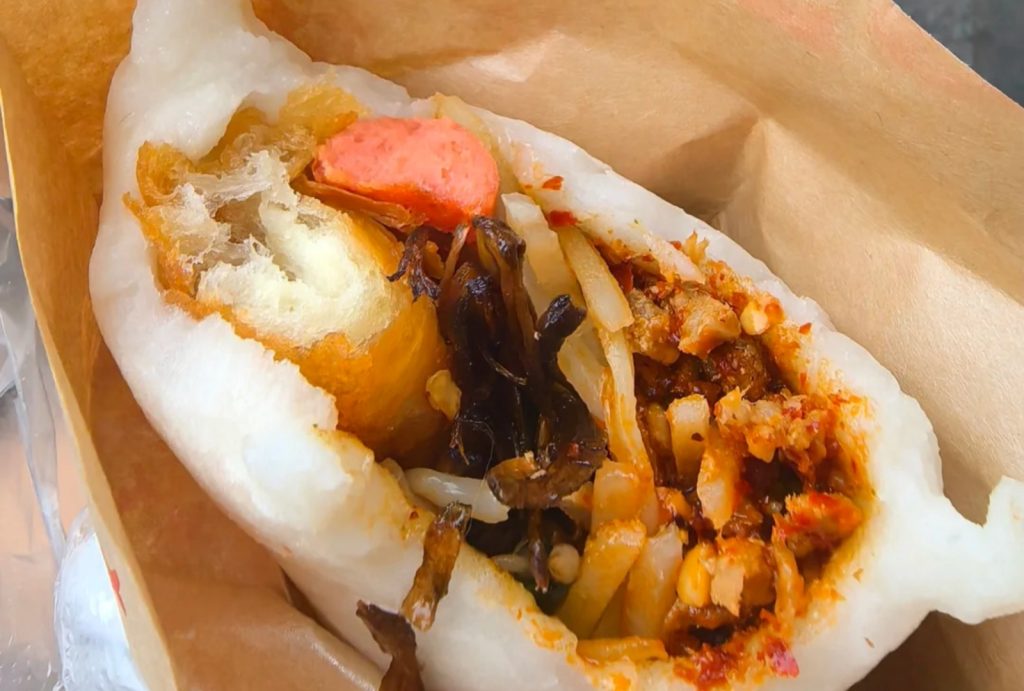
Erkuai is a unique local staple made from boiled and pounded rice, shaped into a soft, flat pancake. On the streets of Kunming, especially in the mornings, you will see vendors grilling these rice flatbreads over hot coals until they puff up. They then spread a mix of sweet peanut sauce and savory soybean paste on the warm bread, and wrap it around a crispy fried dough stick (youtiao). It is a cheap, warm, and highly filling local breakfast.
3. Xizhou Baba (Xǐzhōu Bābā)
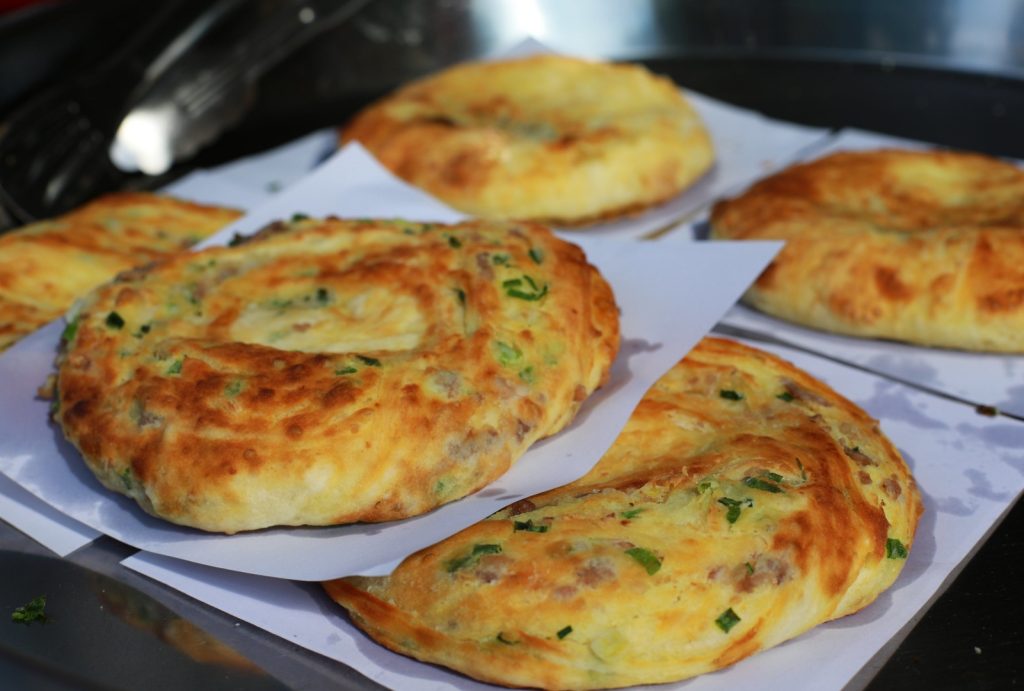
Often called the “Dali pizza,” this is a highly popular snack made by the Bai ethnic group in the ancient town of Xizhou. It is a round, thick flatbread baked in a traditional charcoal oven until the outside is golden, flaky, and crispy, while the inside stays wonderfully soft. You can order it savory (filled with minced pork and green onions) or sweet (filled with local brown sugar or rose jam). It is the perfect walking snack while exploring the old city streets.
4. Yunnan Cheese: Rubing and Rushan
Yunnan cuisine also boasts unique dairy products, a rarity in much of China.
Because of the local minority groups who have herded animals for centuries, cheese is a famous local snack.
- Rubing: This is a firm goat cheese made by the Sani people. It is usually sliced into thick squares, pan-fried until golden brown, and served with a sprinkle of salt or sweet sugar. It tastes very similar to Greek Halloumi.
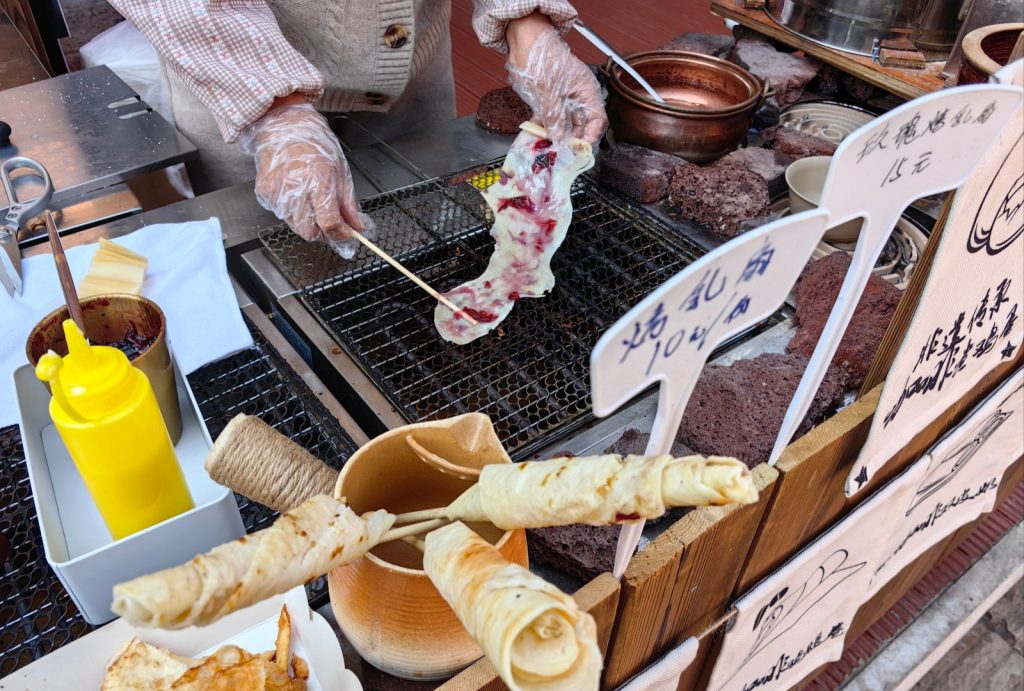
- Rushan: This is a cow’s milk cheese made by the Bai people in Dali. It is stretched into thin, flat sheets, wrapped around a bamboo stick, and grilled over an open fire until it is crispy and puffy, and topped with sweet accompaniments like sweet rose jam, fruit preserves, or condensed milk.
5. Roasted Jianshui Tofu (Kǎo Jiànshuǐ Dòufu)
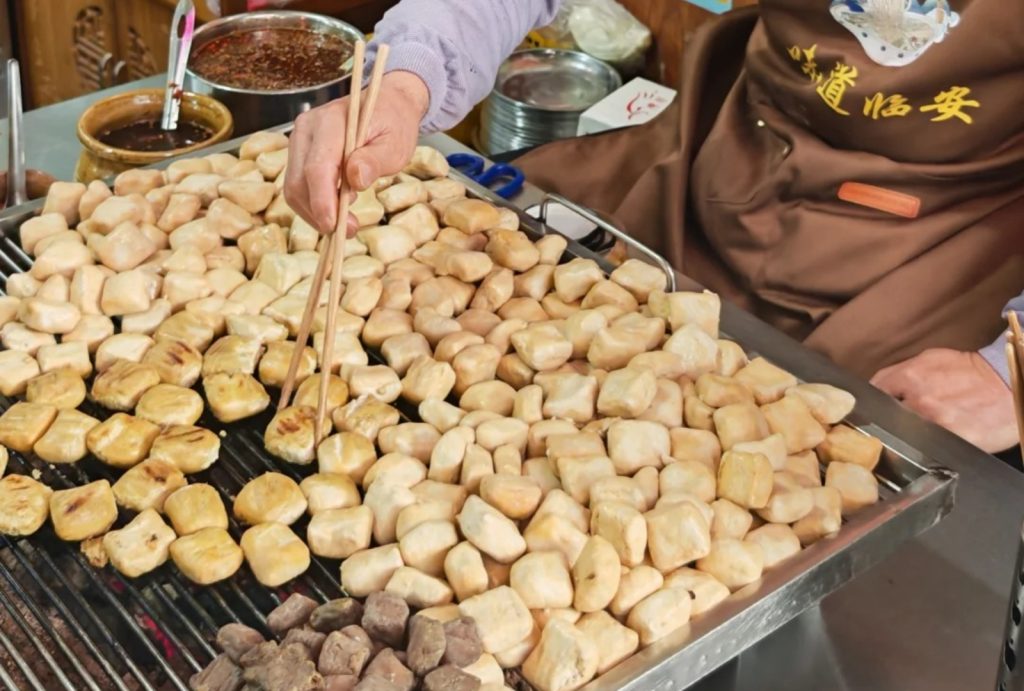
If you are traveling to JianShui in YunNan, you will see locals sitting on tiny plastic stools around a low charcoal grill. The vendor constantly flips small squares of fermented tofu until they puff up like little golden pillows. You eat them hot, dipping them into a mix of dry chili powder and spices.
Where to Eat Yunnan Famous Food
Whether you are walking the modern streets of Kunming or exploring the ancient alleyways of Lijiang, you will easily find these delicious dishes.
1. Kunming: The Culinary Capital
As the capital city, Kunming is the perfect starting point for your food journey.
- Kunming Old Street (Kūnmíng Lǎojiē): This is a beautifully preserved historic block with traditional yellow walls and curved roofs. Beyond sightseeing, it’s a food lover’s paradise, offering quiet teahouses, boutique cafés with local Yunnan coffee, and small eateries serving dishes like Small Pot Rice Noodles (Xiǎoguō Mǐxiàn). Many other delicious local treats await along the stone-paved alleys.
- Fuzhaolou (Fúzhàolóu): If you want to try the most authentic Steam Pot Chicken (Qìguō Jī), this is the top choice. The restaurant features classic, traditional decor and consistently high-quality food.
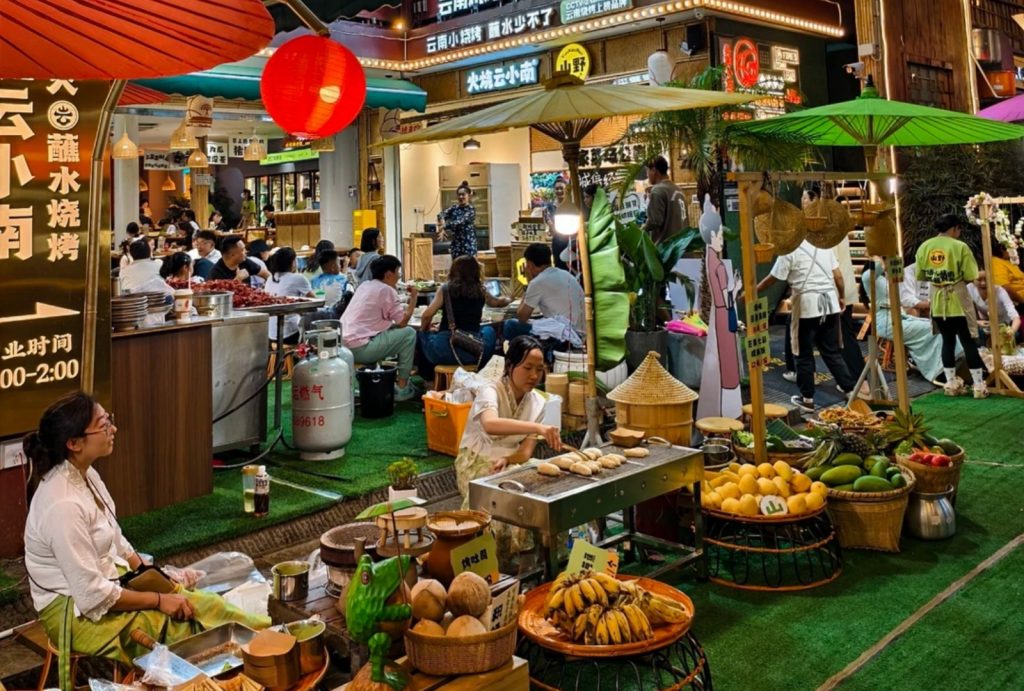
- Nanqiang Street Night Market (Nánqiángjiē Yèshì): If you want to try all the street food in one place, like Roasted Jianshui Tofu (Kǎo Jiànshuǐ Dòufu) or Rose Flower Cakes (Xiānhuā Bǐng), this lively, neon-lit night market is the best spot.
2. Dali: Flavors of the Ancient Town
In Dali, the best food is often hidden inside historic buildings and slow-paced streets.
- Xizhou Ancient Town (Xǐzhōu Gǔzhèn): To eat the most authentic Xizhou Baba (Xǐzhōu Bābā), you must visit the morning market here. Watching the vendors bake it fresh over a charcoal stove gives it a crispy texture you simply cannot find in formal restaurants.
- Renmin Road (Rénmín Lù): This famous street inside Dali Ancient Town is lined with charming little cafes and stalls. You can sit outside, drink a local Dali beer, and enjoy a freshly grilled stick of Rushan (Rǔshān) cheese.

3. Lijiang: Naxi Minority Hospitality
Lijiang’s food is deeply influenced by the Naxi ethnic minority, offering very unique, savory flavors.
- Zhongyi Market (Zhōngyì Shìchǎng): This is the bustling local wet market where Lijiang residents buy their daily groceries. It is an absolute paradise for finding cheap, authentic local snacks away from the main tourist crowds.
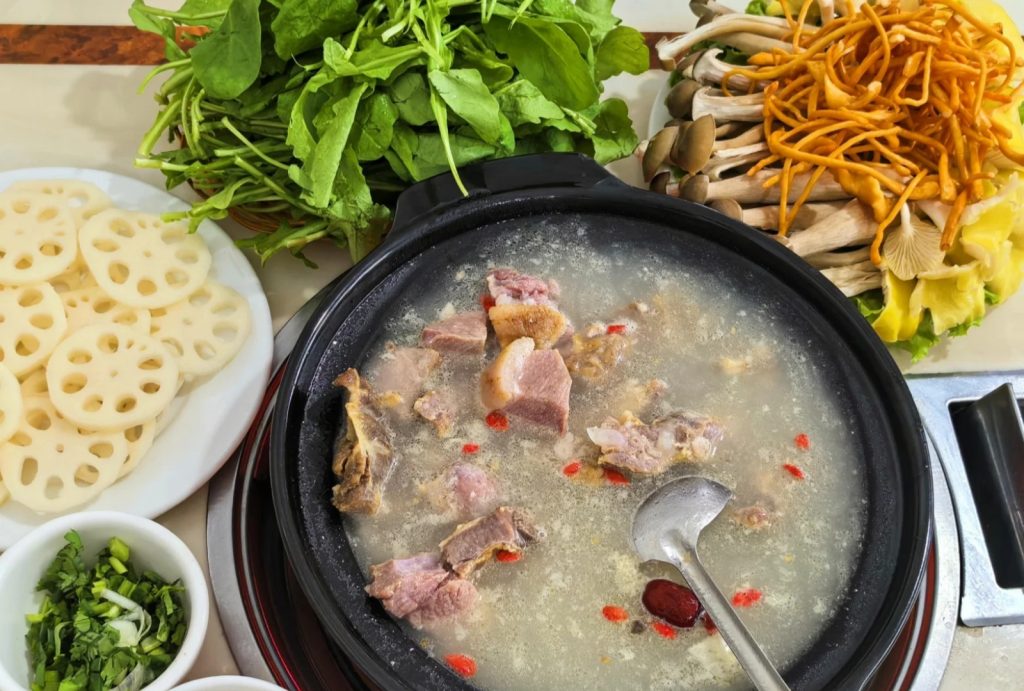
- Cured Rib Hot Pot (Làpáigǔ Huǒguō): You will see restaurants specializing in this dish all over the Lijiang Old Town. This salty, savory, and rich hot pot is incredibly comforting on a chilly evening in the mountains.
Tips for First-Time Diners
To fully appreciate Yunnanese food, consider these suggestions:
- Embrace the Seasons: Wild mushroom hot pot is a highlight during the rainy summer months, with matsutake mushrooms best enjoyed from late summer to early autumn.
- Manage Spice Levels: While Yunnan cuisine is flavorful, it can be spicy. Don’t hesitate to request “less chili” (少辣 – shǎo là) if you prefer milder flavors. The heat is typically aromatic and vibrant rather than solely numbing.
- Choose Reputable Eateries: This is especially important for wild mushroom dishes, as proper preparation is crucial for safety. Stick to established restaurants and busy street stalls.
- Explore Local Condiments: Enhance your meal with local pickled vegetables, chili oils, and fresh herb mixes, which are often provided at the table.
- Pair with Pu’er Tea: Yunnan’s famous Pu’er tea complements the rich broths and earthy flavors of many dishes, while lighter green teas pair well with herb-laden salads and grilled items.
Explore More
Yunnan Scenic Tour: Kunming Dali Shangri-La Lijiang
Dali Erhai Lake – Top 8 Things to Do
❓ People Also Ask
Is Yunnan food too spicy for children?
Not at all. While chili is used in Yunnan cuisine, many popular dishes are mild, savory, and comforting. Kids especially enjoy the interactive Crossing the Bridge Noodles and the sweet Pineapple Purple Sticky Rice. With its approachable flavors, Yunnan is an excellent choice for a family-friendly travel experience.
Are the wild mushrooms in Yunnan safe to eat?
Yes, they are safe and incredibly delicious, provided they are cooked correctly. When you order a Wild Mushroom Hot Pot (Yěshēng Jūn Huǒguō), the restaurant staff will handle the cooking and set a strict timer on your table. Simply wait for the timer to ring before eating, and you will safely experience one of the most beautiful parts of China through its incredible seasonal flavors.
Can I combine food experiences with sightseeing in Yunnan?
Absolutely. In Lijiang, explore Lijiang Old Town while enjoying local snacks. In Dali, dine near Erhai Lake or Dali Ancient Town. In Shangri-La, visit Songzanlin Monastery and try Tibetan cuisine, while Kunming combines food with sights like Stone Forest.
Is it easy to find halal food in Yunnan?
Yes, especially in cities like Kunming, where Muslim communities offer halal restaurants and food streets. Look for signs with the Chinese word “清真” (halal).
Do locals really eat insects in Yunnan?
Yes! Deep-fried insects are a traditional, high-protein delicacy in Yunnan, particularly among the ethnic minority groups. If you wander through local night markets or visit Dai minority restaurants, you will likely see plates of crispy bamboo worms, grasshoppers, and bee pupae. They are completely safe to eat and usually seasoned heavily with salt and chili—they taste remarkably like crunchy potato chips. It is a fantastic culinary adventure.