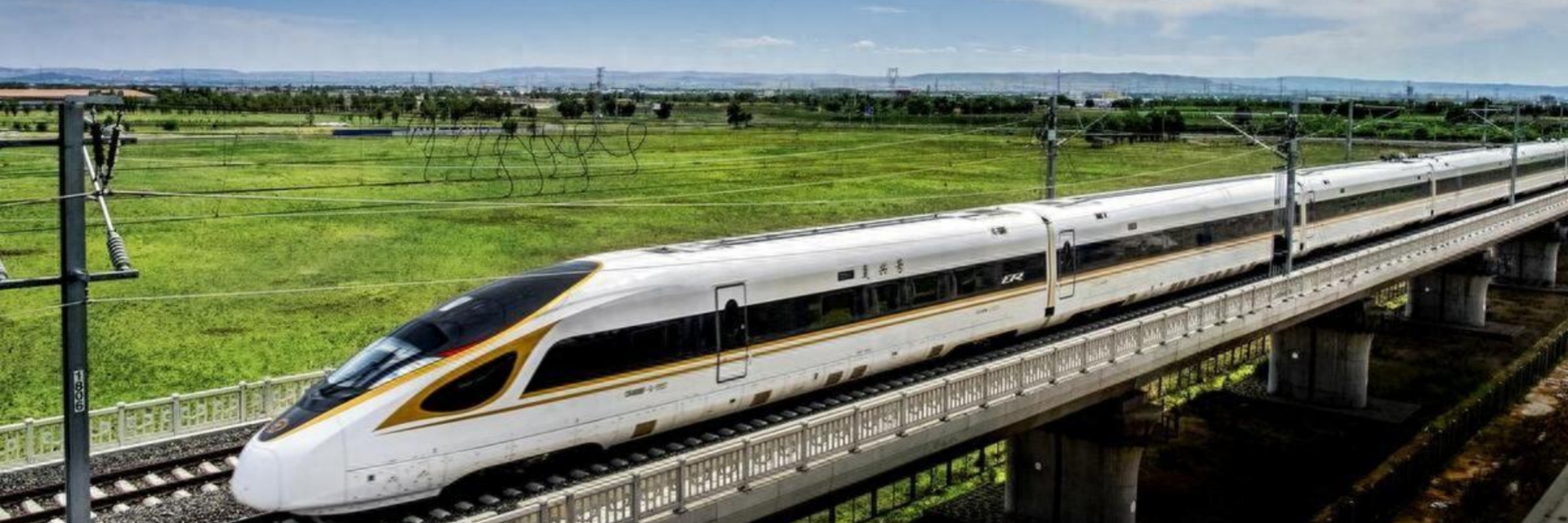
China High-Speed Train Guide for Tourists 2026
When planning a trip to China, transportation is one of the most important factors to consider, as it directly affects your time, budget, and overall travel experience. Spanning over 40,000 km at speeds topping 300 km/h, China high-speed train isn’t just the most efficient way to travel—it is an essential cultural experience.
While large stations and ticketing systems may seem intimidating, the process is now fully modernized. This guide explains everything international tourists need to know about China high-speed trains, from booking tickets to navigating stations and choosing the right seats.
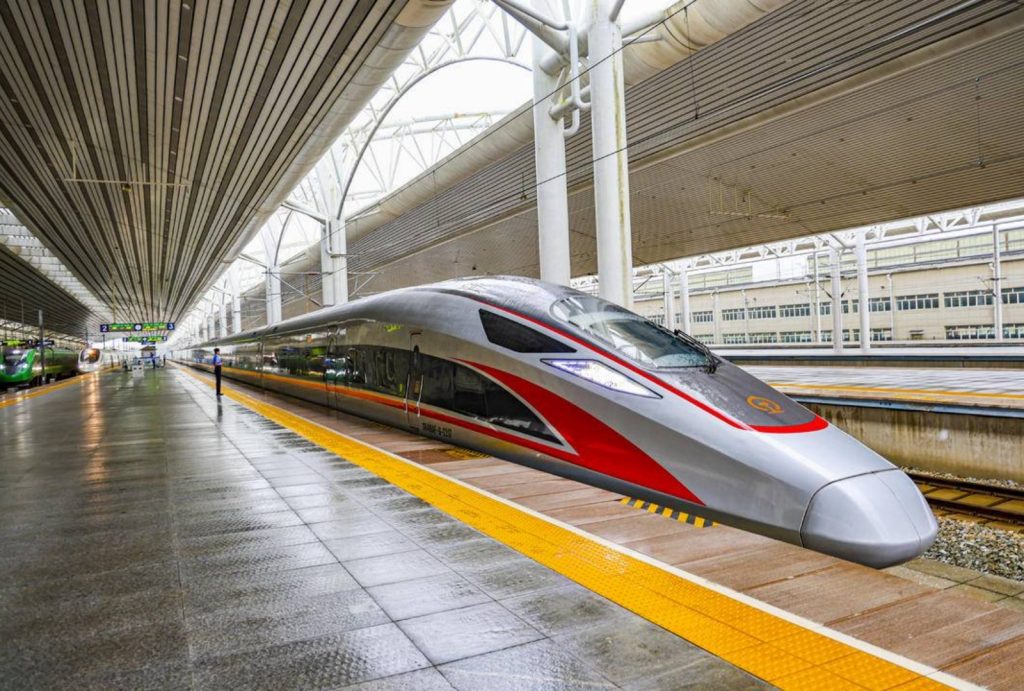
What Is China High-Speed Rail System?
China high-speed rail (HSR) network connects nearly all major cities and many smaller destinations. Trains are commonly referred to as “Gaotie” (高铁), and they are identified by train numbers beginning with “G,” “D,” or “C.”
Routes link key travel hubs such as Beijing, Shanghai, Xi’an, and Guangzhou, allowing tourists to travel across vast distances quickly and comfortably.
For example, a journey that once took over 12 hours by traditional train can now be completed in about 4–6 hours on a high-speed train.
How to Book: The Official 12306 App vs. Third-Party Platforms
For international tourists, there are two primary ways to book China high-speed train tickets. Both require you to input your exact name and passport number exactly as they appear on your travel document.
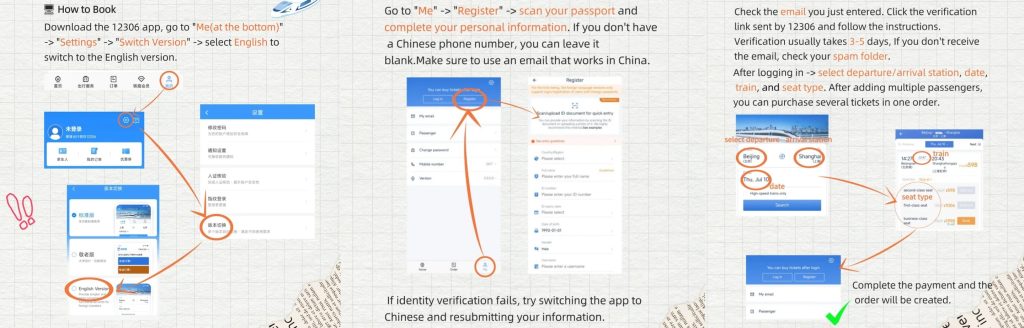
Option 1: The Official Railway 12306 App
12306 is the only official ticketing system operated by China Railway. All tickets ultimately come from this platform.
- The Process: You must download the app and complete a mandatory identity verification process before you can buy a ticket. This involves uploading a clear photo of your passport’s data page and completing a real-time facial recognition scan within the app. Verification usually takes only a few minutes, but can occasionally take a few days, so do this well before your trip.
Pros:
- Lowest Price (No Service Fee)
You pay the official railway price with no markup. - Real-Time Availability
You see the exact ticket inventory directly from the railway system. - Improved International Payment Support
- The English version of 12306 now supports international credit cards such as Visa and MasterCard, making it much more accessible for overseas users than before.
- Highest Success Rate
Since you book directly, you have the best chance of securing popular tickets. - Full Control
Easier to modify, cancel, or change tickets directly.
Cons:
- Registration Is Complicated
Passport verification and approval can delay booking. - Limited English Support
Interface and customer service are not very foreigner-friendly. - Not Beginner-Friendly
The system can feel technical and rigid for first-time users.
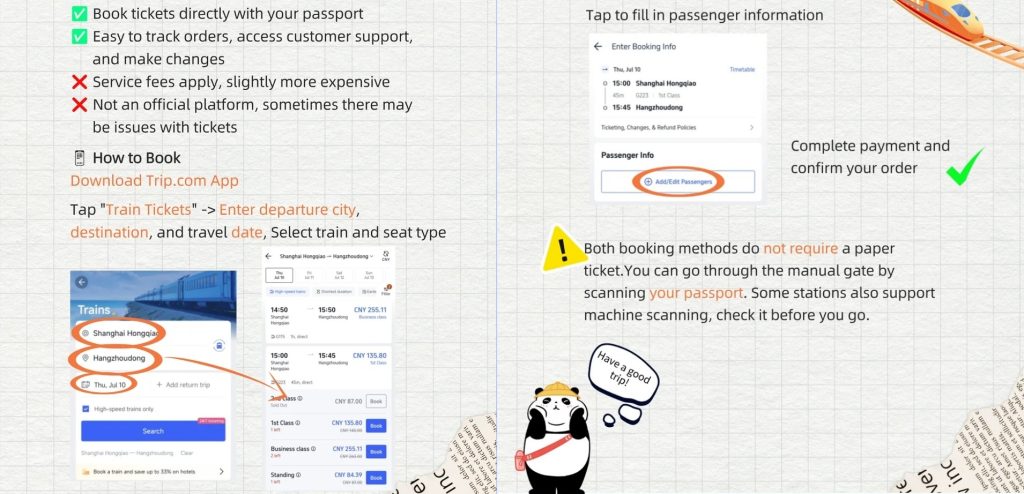
Option 2: Using Trip.com for Convenience
For many foreigners, booking through third-party platforms like Trip.com remains the most stress-free option, especially if the 12306 app’s facial recognition glitches.
Pros:
- Extremely User-Friendly Interface
Provides a smooth, fully English booking experience designed specifically for international travelers. - Flexible and Global Payment Options
Supports Visa, MasterCard, PayPal, Apple Pay, and more, often with fewer payment issues than 12306. - Strong English Customer Support
24/7 customer service in English is a major advantage, especially if plans change. - Simplified Booking Process
No complicated verification steps upfront, making it ideal for first-time users.
Cons:
- Service Fees Apply
Prices are slightly higher due to booking and service fees.
- Not the Original Ticket Source
Tickets still come from 12306, so there can be:
1.Slight delays in availability updates
2.Occasional booking failures if tickets sell out quickly
- Lower Priority During Peak Demand
In high-demand periods, direct bookings via 12306 may still have a slight edge.
Understanding Ticket Classes: Second, First, and Business Class
When booking your high-speed rail ticket on 12306 or Trip.com, you will typically be presented with three distinct seating options.
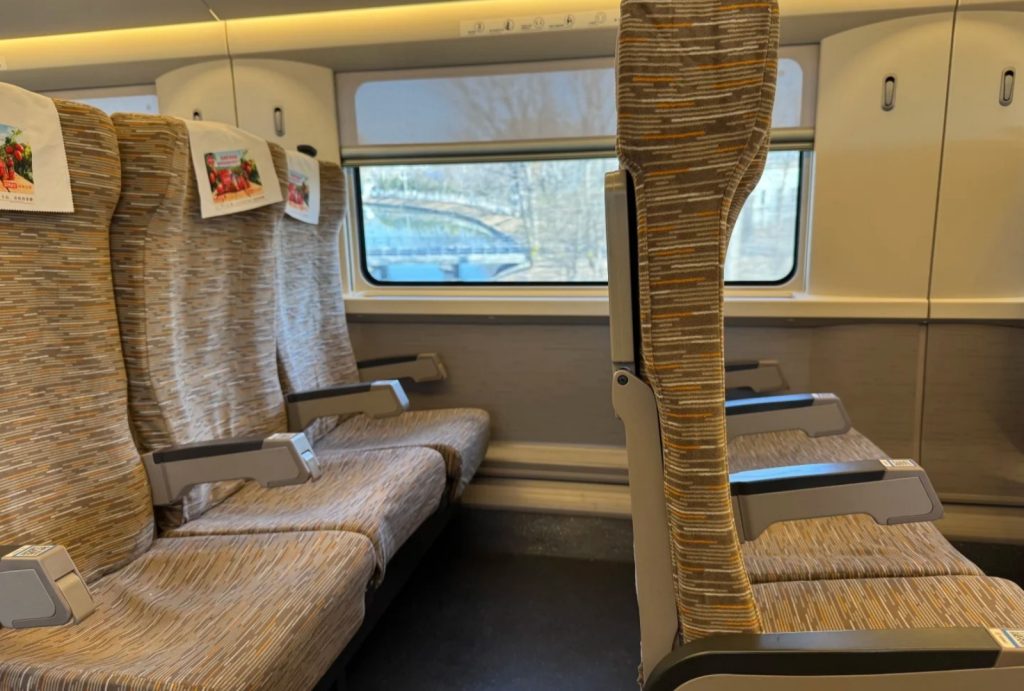
Second Class (二等座): The Standard Choice
Second Class is the most popular and economical option, perfectly suited for journeys under 4 hours.
- The Layout: Seats are arranged in a 3+2 configuration across the aisle.
- The Experience: Do not let the word “Second” deter you. The seats are much more spacious than standard airline economy class, offering ample legroom, fold-down tray tables, and adjustable reclining backs.
- Amenities: You will find standard power outlets (either under the seat or near your feet) to charge your devices. This carriage can be lively and bustling, offering a great glimpse into everyday local travel.
First Class (一等座): The Sweet Spot for Comfort
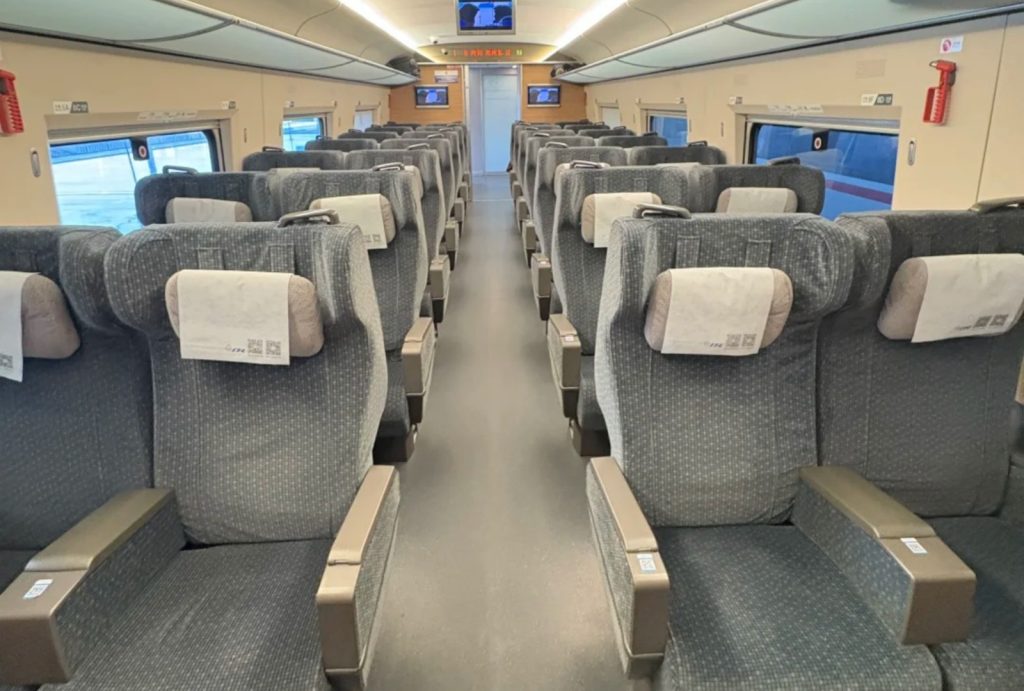
If you are traveling for 4 to 8 hours (such as the journey from Beijing to Shanghai), upgrading to First Class is highly recommended for foreign travelers seeking a quieter environment.
- The Layout: Seats are arranged in a more spacious 2+2 configuration, meaning no middle seats.
- The Experience: The seats are noticeably wider, heavily cushioned, and feature a deeper recline. You are also provided with a fold-out footrest and a small reading lamp.
- Amenities: First Class carriages are generally much quieter and less crowded than Second Class. The power outlets are usually conveniently located right in the armrests, and attendants come by more frequently to offer snacks and drinks for purchase.
Business Class (商务座): The Ultimate Luxury
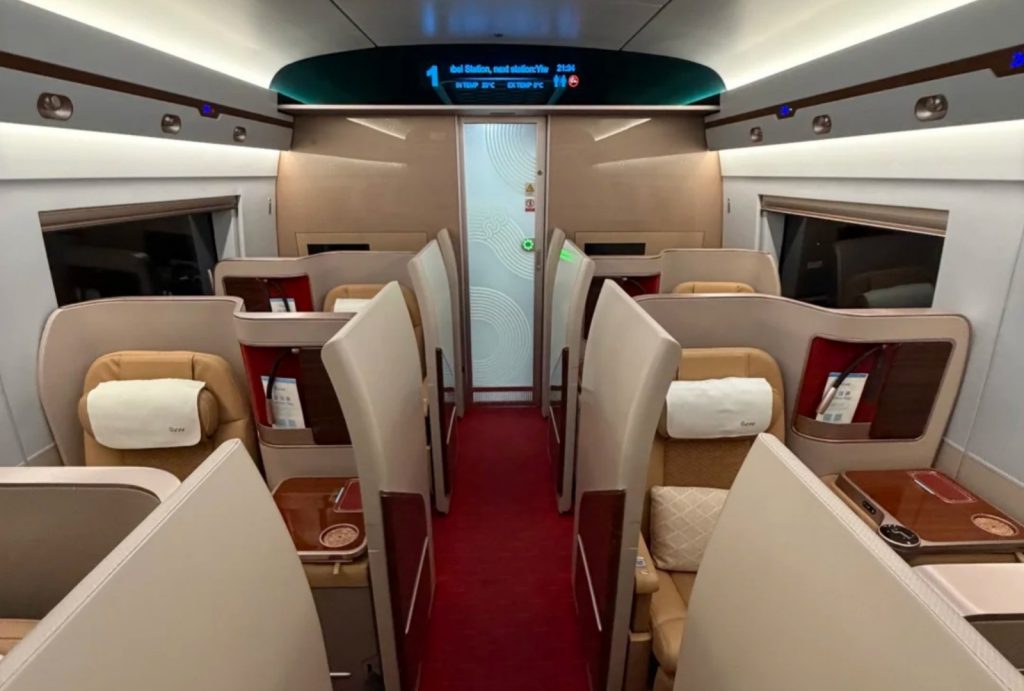
Business Class on China’s high-speed rail is comparable to international First-Class airline cabins. It is the most expensive option, but offers an unparalleled, VIP travel experience.
- The Layout: Seats are incredibly spacious, arranged in a 1+2 or even 1+1 configuration. On the newest “Fuxing” train models, these are entirely private pods.
- The Experience: The seats electronically recline into fully flat beds, perfect for sleeping on long cross-country routes.
- Amenities: Booking a Business Class ticket grants you access to exclusive VIP lounges at the departure station (offering free Wi-Fi, snacks, and comfortable seating away from the crowds). Onboard, you are provided with complimentary meals, unlimited drinks, slippers, and a quiet, highly attentive service environment.
China High-Speed Train Guide: Step-by-Step Boarding Process
Chinese high-speed railway stations are vast. Always plan to arrive at the station 45 to 60 minutes before your departure time.
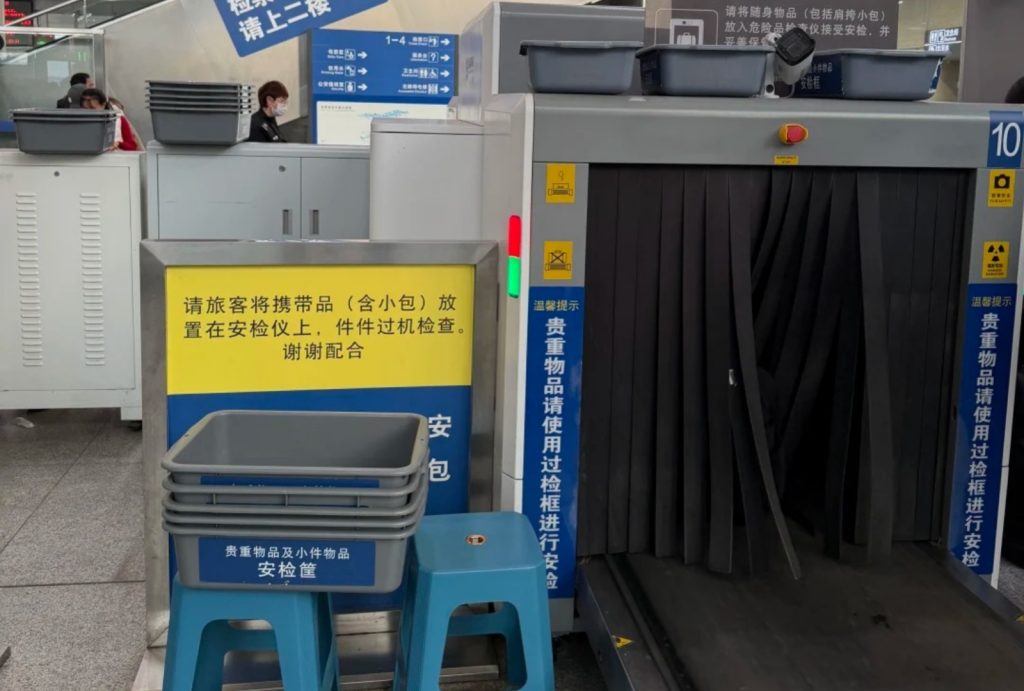
Step 1: Security Checks and Station Entry
When you arrive at the station, you will immediately pass through a security checkpoint. Place all your luggage on the x-ray belt and walk through the metal detector. Keep your passport in your hand; you will need to hand it to a guard or scan it at a turnstile just to enter the main hall.
Step 2: Finding Your Waiting Room and Gate
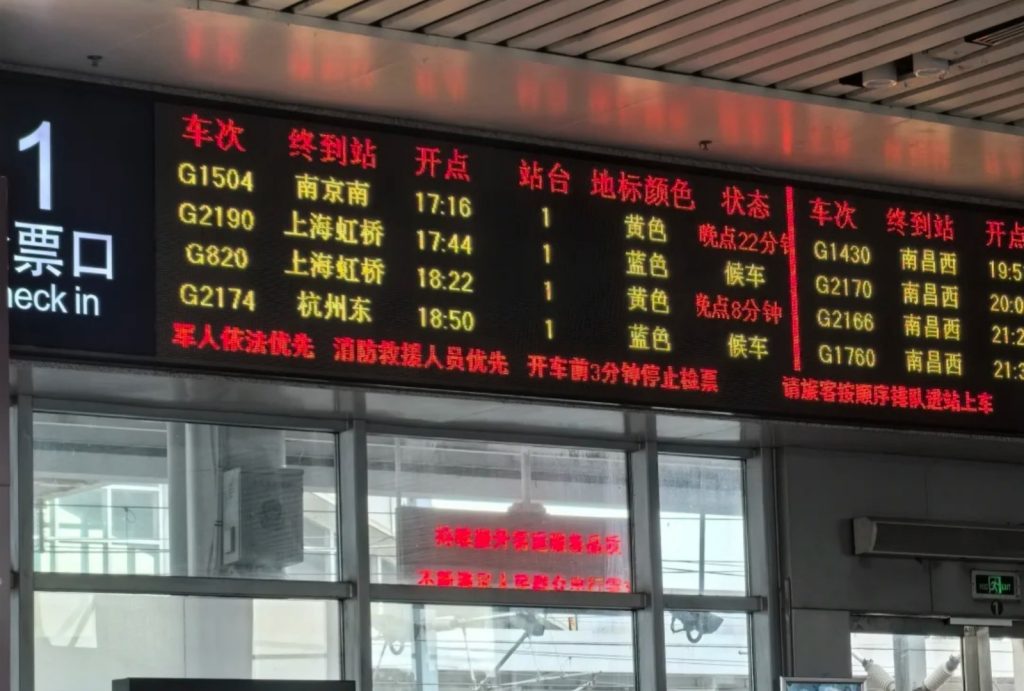
Once inside, look up at the massive digital departure boards. While the destinations are often in Chinese, the Train Number (e.g., G312 or D81) and the Departure Time are always displayed in standard numerals. Find your train number on the board to locate your designated Boarding Gate (e.g., Gate 12A). Head to that waiting area.
Step 3: Swiping Your Passport at the Turnstile
Boarding gates typically open 15 to 20 minutes before departure and close strictly 5 minutes before the train leaves.
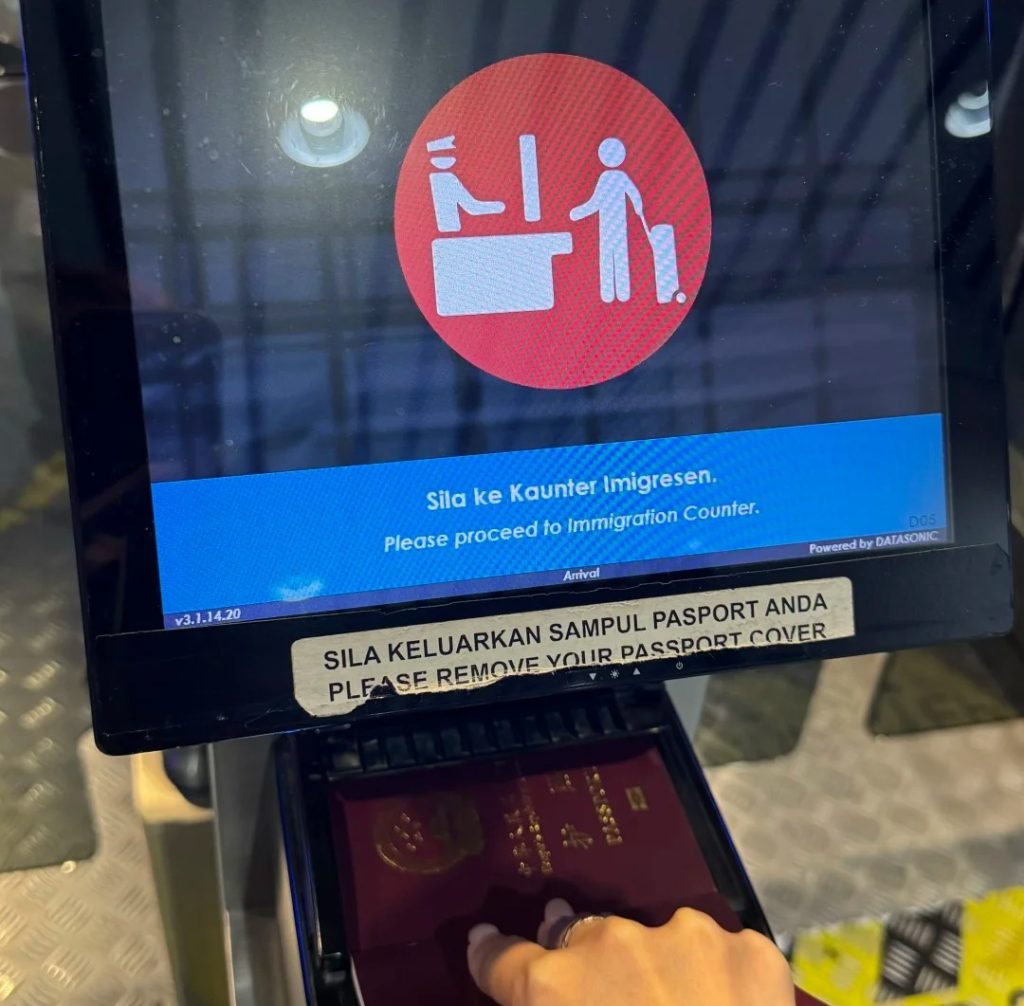
- Look for the automated turnstile marked with “护照” (Passport) or look for the wider “人工通道” (Manual Lane/Staffed Lane).
- Place your passport face down on the glass scanner. The screen will light up green, the gates will open, and you can proceed down to the platform.
Step 4: Finding Your Carriage and Seat
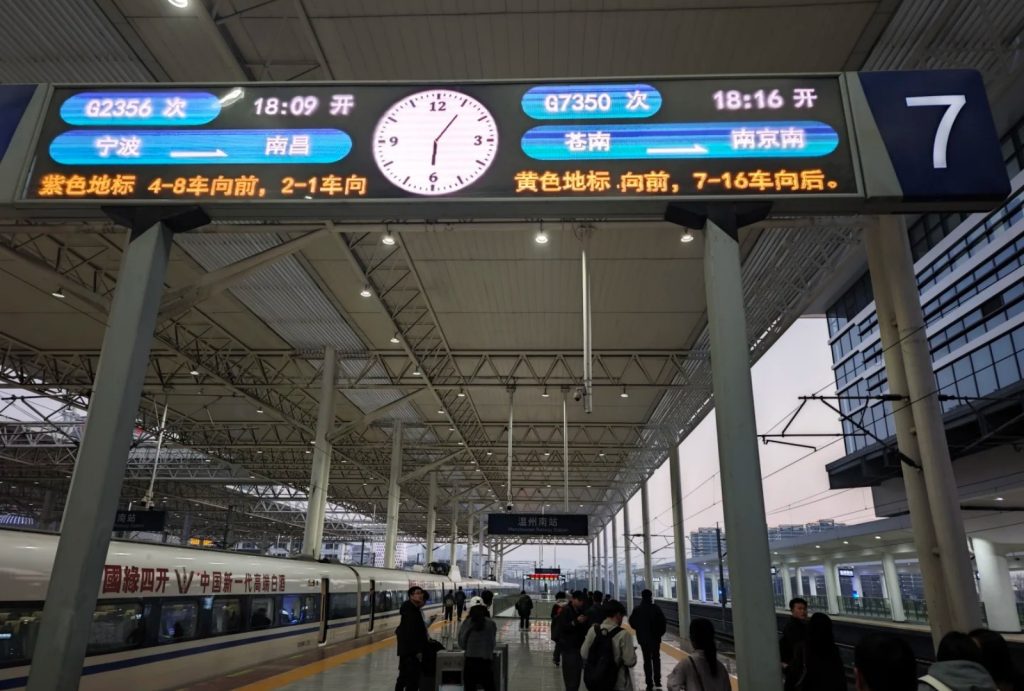
As you take the escalator down to the platform, look at the digital signs overhead or the colored numbers painted directly on the ground. These indicate exactly where each specific carriage (e.g., Carriage 5) will stop.
Essential Rules for China High-Speed Train Travel
Keep these essential rules in mind to guarantee a seamless and hassle-free high-speed train experience.
- Luggage Storage: High-speed trains do not have strict weight limits like airlines, but space is finite. Small suitcases go in the overhead racks. For large, heavy luggage (like 28-inch suitcases), there are dedicated luggage closets at the very front and back of every carriage. Board early to secure space in these closets.
- Food and Drink: You are welcome to bring your own food, snacks, and coffee onboard. The trains also have a dining car (usually located in the middle of the train) and attendants who push carts down the aisles selling snacks, drinks, and boxed meals. Every carriage also features a hot water dispenser, perfect for making instant noodles or tea.
- Bathroom Etiquette: Every carriage features both Western-style sit-down toilets and traditional Chinese squat toilets. A red light above the door means it is occupied; green means vacant.
Whether you are speeding toward the ancient majesty of the Terracotta Army in Xi’an or traversing the mountainous landscapes to explore the vibrant, multi-layered streets of Chongqing, China high-speed train effortlessly connects your ultimate travel itinerary. Once you have swiped your passport at the automated gates and settled into your spacious seat, you will feel the silent, ultra-smooth acceleration. Vast cross-country distances quickly become scenic journeys, putting all of China entirely within your reach.
❓ People Also Ask
What happens if I miss my high-speed train?
If you miss your train, your ticket is no longer valid, but you can still fix it. Go to the manual ticket window and, if seats are available, change to a later train the same day for free (pay only any fare difference). Changes to a different day are not allowed after departure.
Is there Wi-Fi on the bullet trains?
Most high-speed trains offer onboard Wi-Fi, but logging in usually requires a Chinese phone number. For foreign travelers, this can be difficult, so it’s best to rely on your own mobile data during the journey.
Is there a luggage weight limit on China’s high-speed rail?
Officially, luggage is limited to 20 kg per adult, with total dimensions not exceeding 130 cm. In practice, these rules are rarely enforced unless items are oversized. A standard 28-inch suitcase is acceptable and can be stored in the luggage racks at the end of each carriage.