Beijing Best Hutongs to Visit | Ultimate Guide
By Jasmine
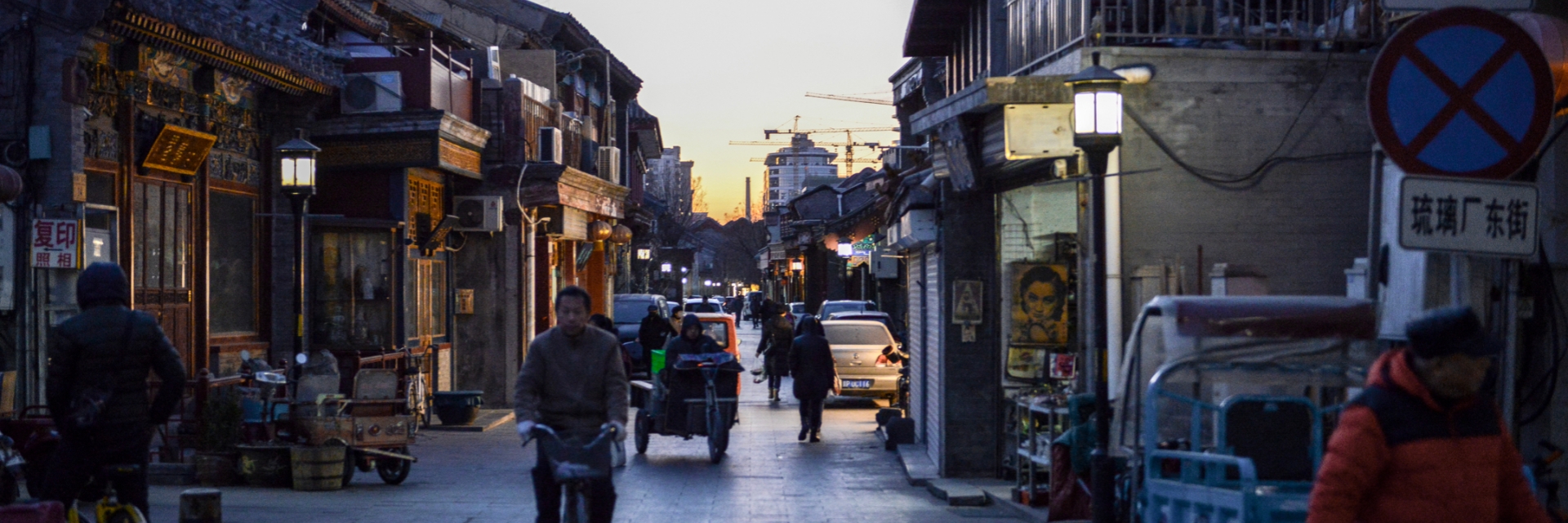
Beijing hutongs, known in Chinese as “北京胡同” (Běijīng hútòng), reflect Beijing’s oldest neighborhoods and everyday life. These narrow lanes show a close look at Beijing local culture, with small shops, old courtyards, and relaxed Beijing street life. This guide will help you find the best hutongs in Beijing and enjoy a simple and meaningful walk through the city.
Nanluoguxiang Beijing Hutongs: Trendy Meets Traditional
Nanluoguxiang is the most famous hutong in Beijing, and for good reason. It balances old Beijing charm with young energy. The main street is bustling, but the side lanes are quiet—perfect for exploring both crowds and calm.
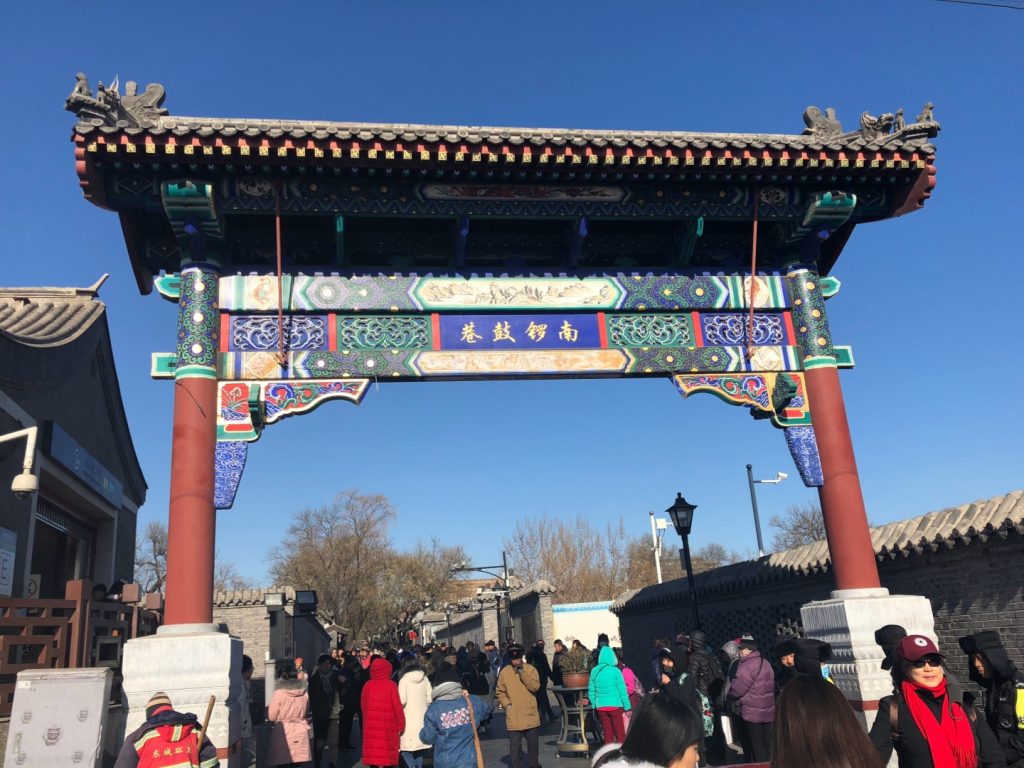
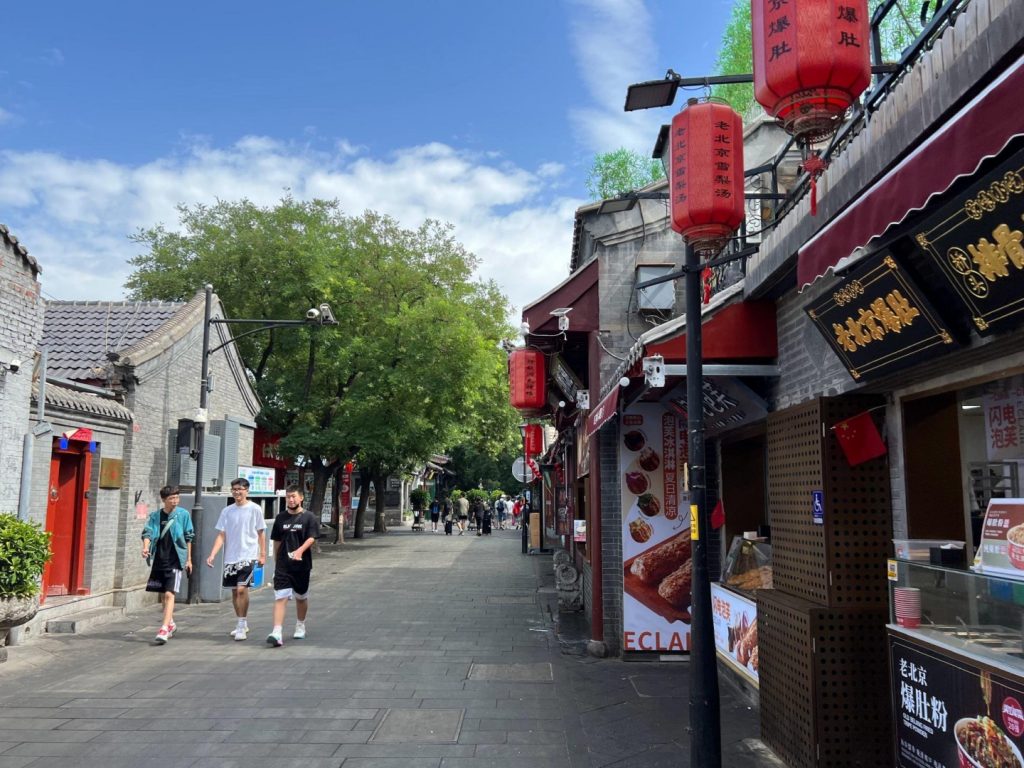
Location: Dongcheng District, between Gulou East Street and Di’anmen East Street
Key Features: Gray-brick walls line the street, with red lanterns hanging above shop doors. You’ll find traditional snack stalls next to modern bookstores, and vintage clothing shops beside cozy cafes.
Must-Do Experiences:
- Try jianbing from a street stall—crispy dough with egg, sauce, and green onions.
- Wander into the side lanes (like Mao’er Hutong and Yan’er Hutong) to see well-preserved siheyuan. Some courtyards open their doors for visitors to peek at the traditional layout.
- Visit a hutong-themed bookstore to pick up small souvenirs, like postcards with hutong photos.
Transportation: Take Subway Line 6/8 to Nanluoguxiang Station (Exit A), walk 2 minutes.
Yandai Xiejie Beijing Hutongs: Old Beijing’s Cultural Lane
Yandai Xiejie (Pipe Slanted Street) gets its name from the pipe shops that filled the lane 100 years ago. Today, it keeps its old-world vibe with traditional crafts and time-honored stores.
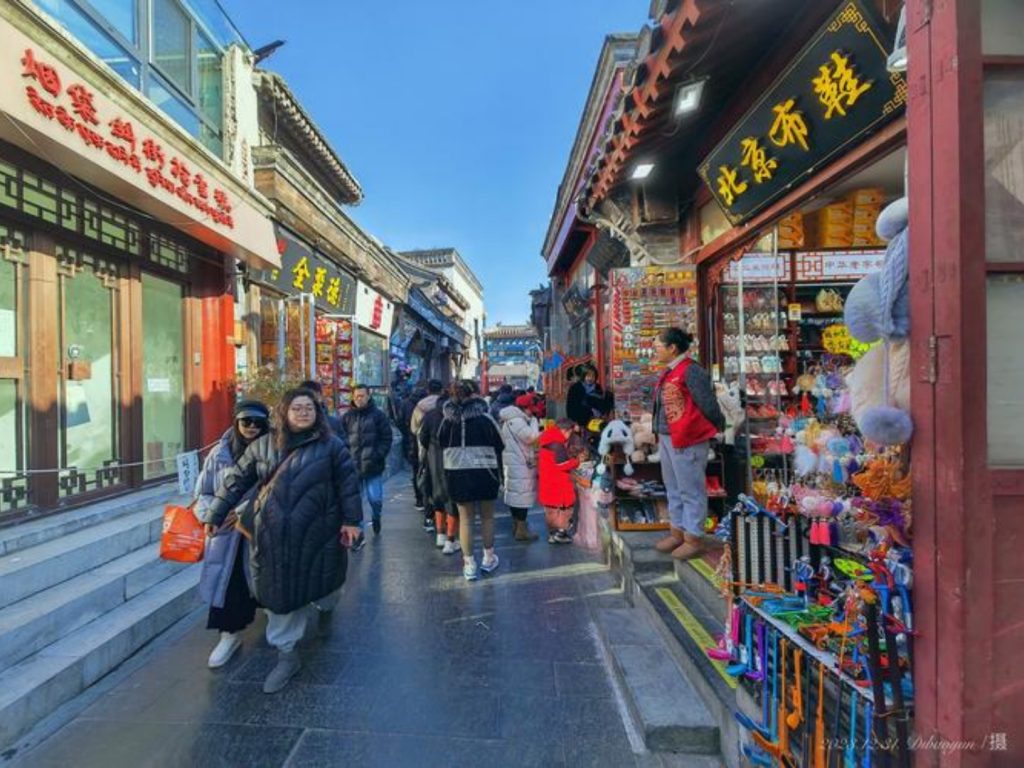
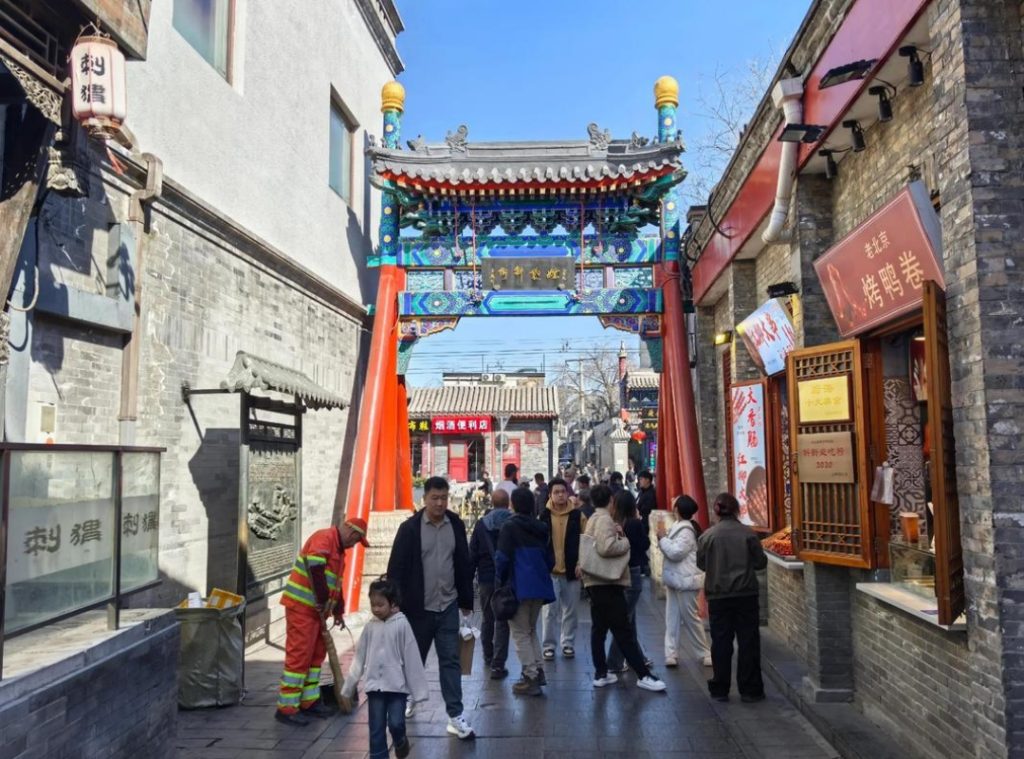
Location: Xicheng District, connecting Di’anmen West Street and Houhai North Bank
Key Features: The street is slightly slanted (hence “Xiejie”). Wooden signboards hang outside shops, and you’ll see craftsmen making jade carvings or paper-cuts on the street.
Must-Do Experiences:
- Step into a traditional tea house to drink jasmine tea and listen to erhu (a two-stringed instrument) performances.
- Buy hand-painted folding fans or jade pendants from local craftsmen—these make great unique souvenirs.
- Walk to the end of the street to reach Houhai Lake, where you can rent a paddle boat after exploring the hutong.
Transportation: Take Subway Line 8 to Shichahai Station (Exit B), walk 5 minutes.
Wudaoying Beijing Hutongs: Quiet & Artistic Retreat
Compared to Nanluoguxiang, Wudaoying is quieter and more artistic. As one of the more relaxed Beijing hutongs, it’s a favorite among expats and young Beijingers, with small galleries, simple cafés, and small local guesthouses.
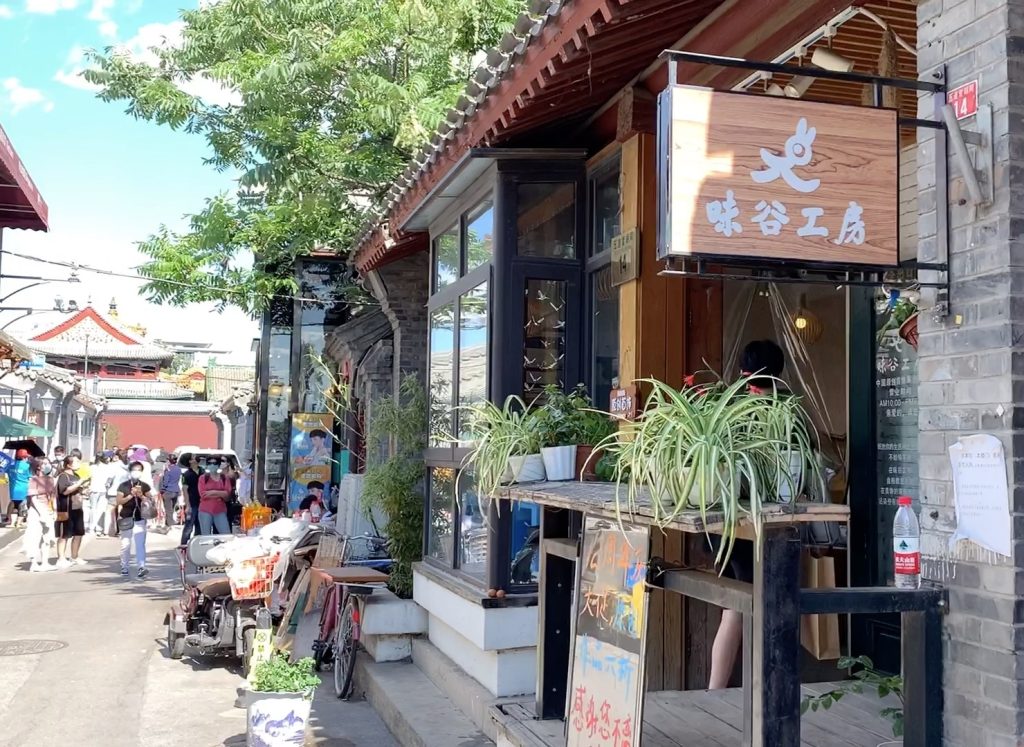
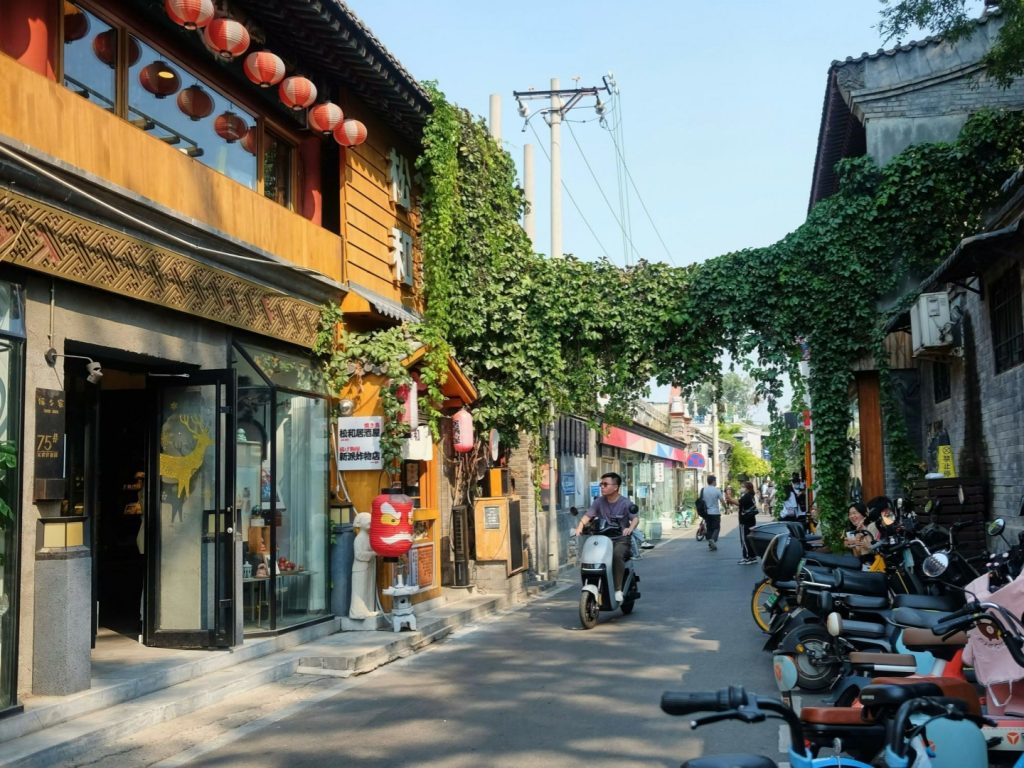
Location: Dongcheng District, near Andingmen Inner Street
Key Features: The lane is lined with green plants and colorful doorways. Many shops have small outdoor seats, where you can sit and watch locals walk their dogs or ride bicycles.
Must-Do Experiences:
- Relax in a courtyard cafe with a cup of latte—many cafes use hutong elements in their decor, like brick walls or old windows.
- Visit a small art gallery to see works by local artists, often themed around Beijing’s history.
- Try “hutong-style” Western food, like pizza baked in a traditional brick oven.
Transportation: Take Subway Line 5 to Andingmen Station (Exit B), walk 8 minutes.
Shichahai Beijing Hutongs: Scenic & Lively
The hutongs around Shichahai (Houhai, Qianhai, and Xihai Lakes) are scenic and lively. They combine water views with hutong culture and give you another look at beijing hutongs, especially beautiful at night when lanterns light up the lake.
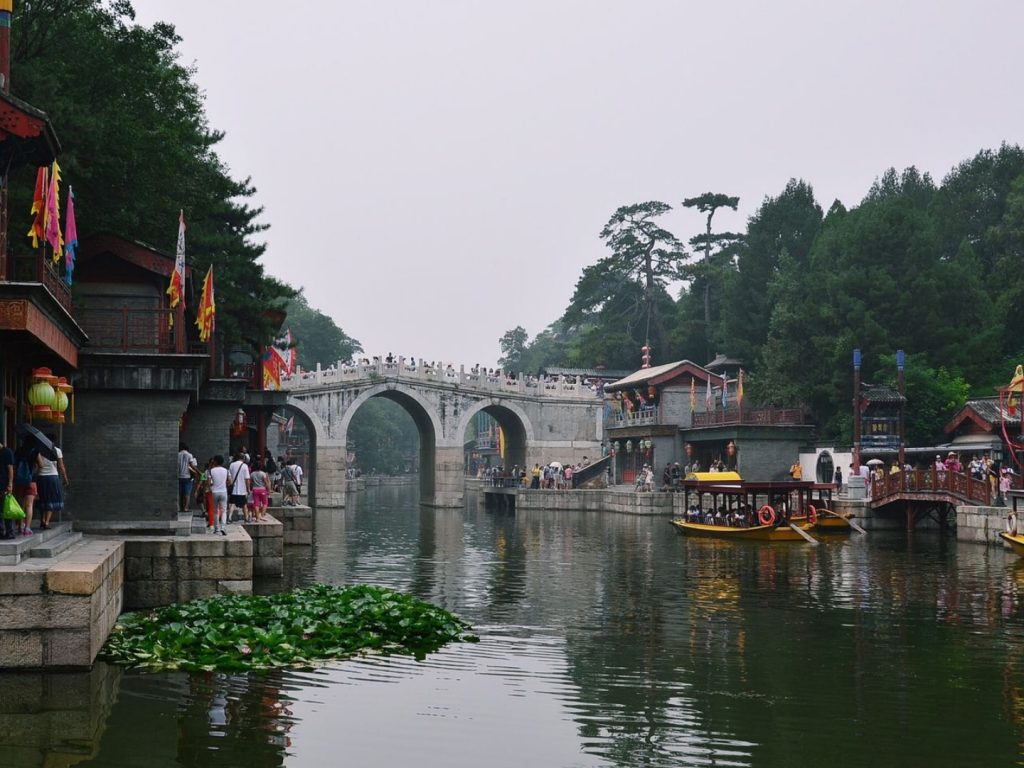
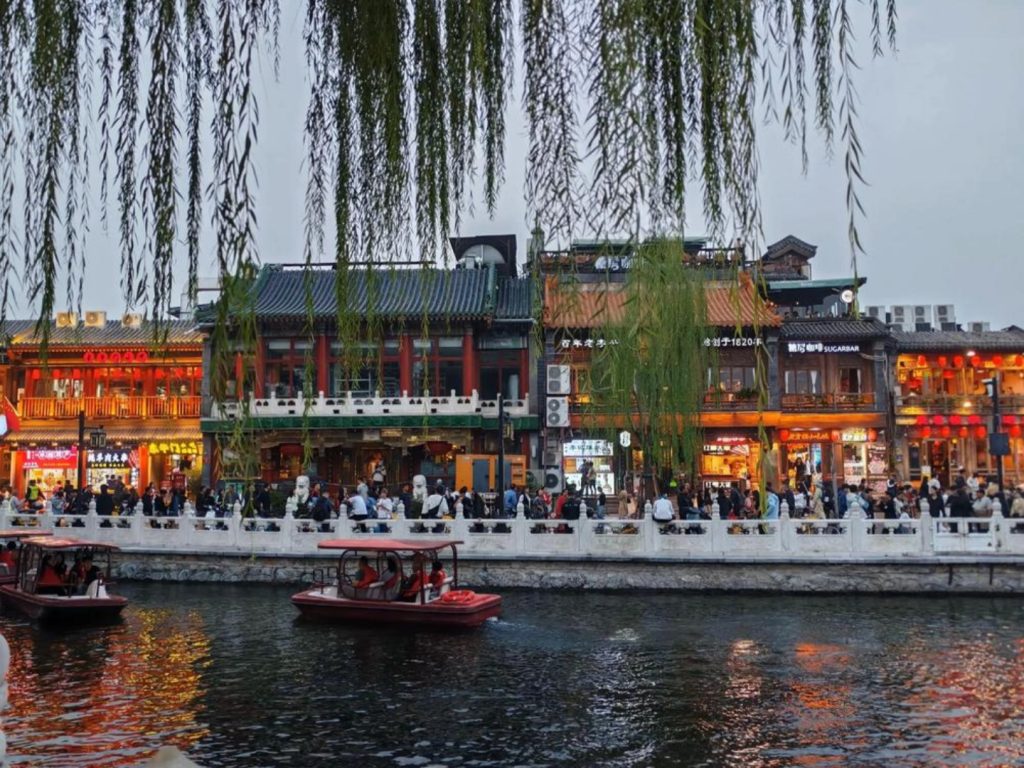
Location: Xicheng District, surrounding Shichahai Lake Area
Key Features: The hutongs run along the lake, with willow trees hanging over the water. You’ll see locals flying kites by the lake and children chasing each other in the lanes.
Must-Do Experiences:
- Rent a bicycle to ride around the lake and through the hutongs—this is the best way to cover a large area.
- Eat “lamb skewers” (yangrou chuan) from a street stall—locals love the smoky flavor.
- Visit Prince Gong’s Mansion (a famous historical site) located in the hutongs near Qianhai Lake.
Transportation: Take Subway Line 8 to Shichahai Station (Exit C), walk 3 minutes to the lake area.
Practical Tips for Beijing Hutongs Exploration
Best Time to Visit: Go in the morning (8:00-10:00) to see locals’ daily life—elders doing tai chi, vendors setting up stalls. Or go in the evening (18:00-20:00) when lanterns light up, and the hutongs become warm and magical.
What to Wear: Wear comfortable shoes—hutongs have uneven stone paths, and you’ll walk a lot. In spring or autumn, bring a light jacket—Beijing’s weather can change quickly.
Photography Tips: Use natural light for photos. The golden hour (one hour after sunrise or before sunset) is perfect for capturing the warm glow on gray bricks. Ask locals for permission before taking photos of them or their courtyards.
Local Etiquette: Hutongs are residential areas. Keep your voice down, don’t litter, and don’t peek into closed courtyard doors. Greet locals with a smile—they’re usually happy to give directions.
Beijing Hutongs Must-Try Street Foods and Local Delights
Beijing hutongs offer more than historic streets—they are full of local flavors and classic Beijing foods. Here are some must-try treats:
1. Noodles and Dumplings
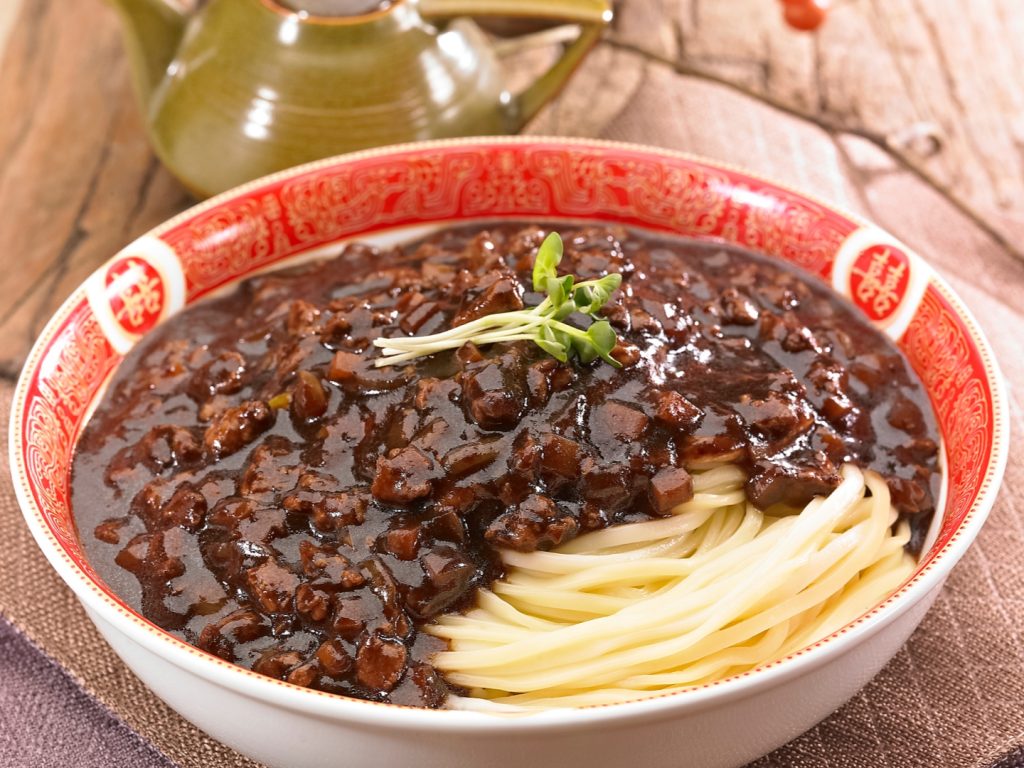
- Zhajiangmian: Savory soybean paste noodles, a Beijing classic.
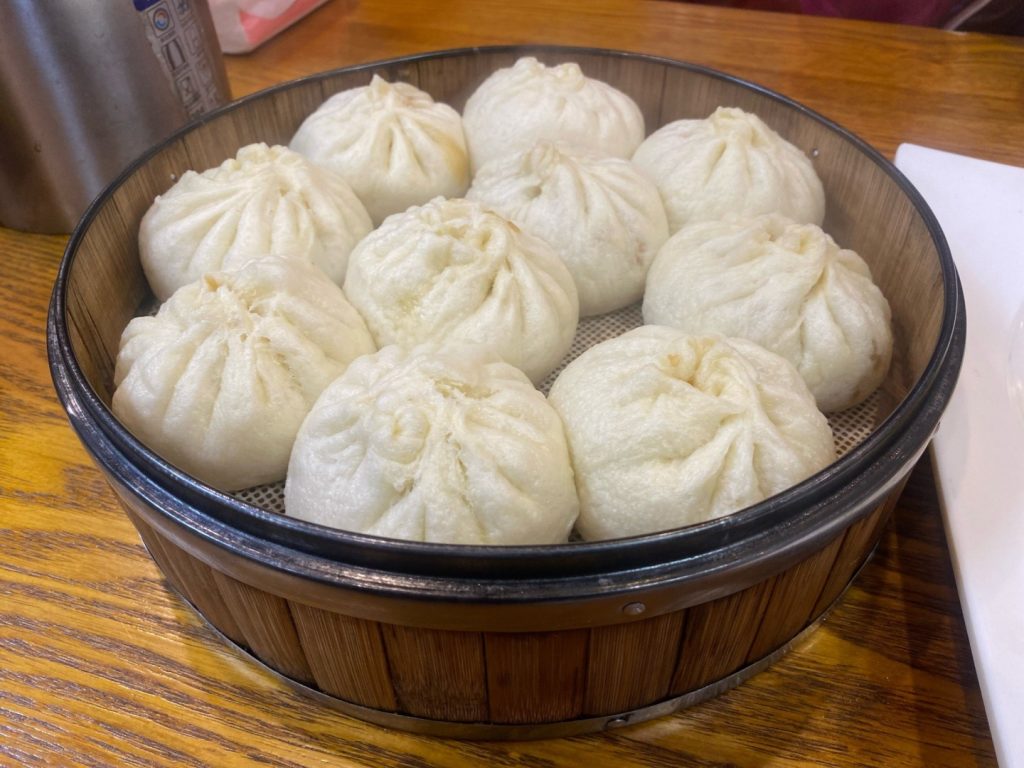
- Jiaozi and Baozi: Delicious dumplings and steamed buns from small family-run shops.
2. Sweet Snacks
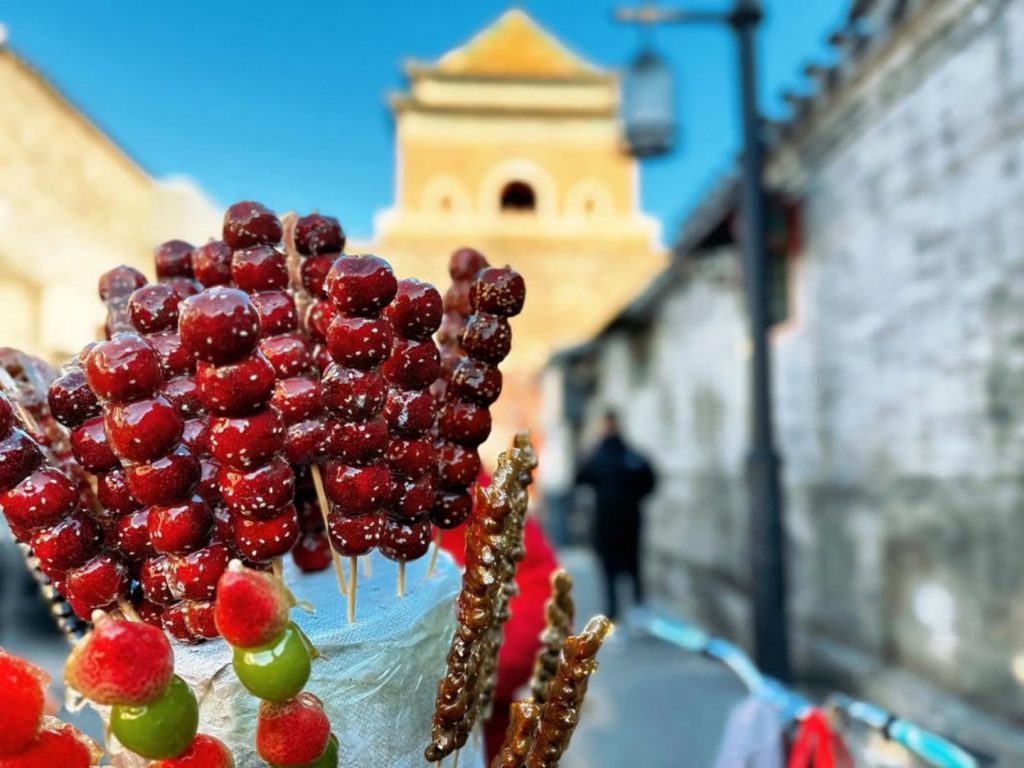
- Tanghulu: Candied hawthorns or other fruits on a stick, perfect for a sweet and tart bite.
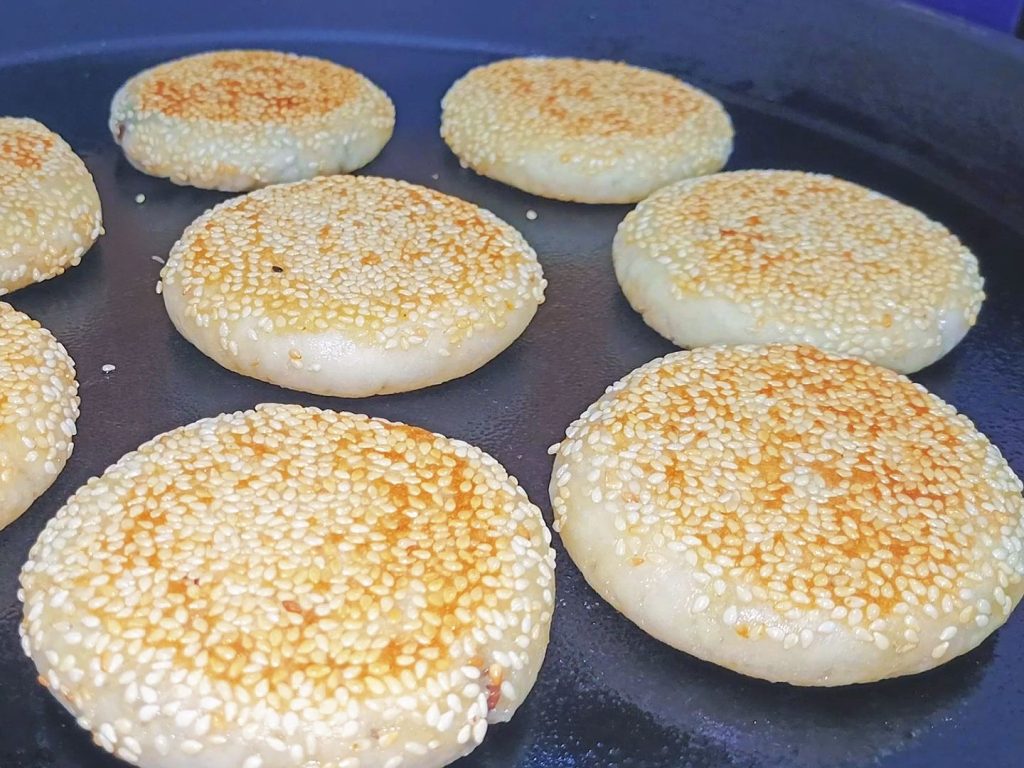
- Sesame Snacks and Fried Rings: Traditional treats you can easily find in hutongs.
3. Drinks and Relaxing Spots
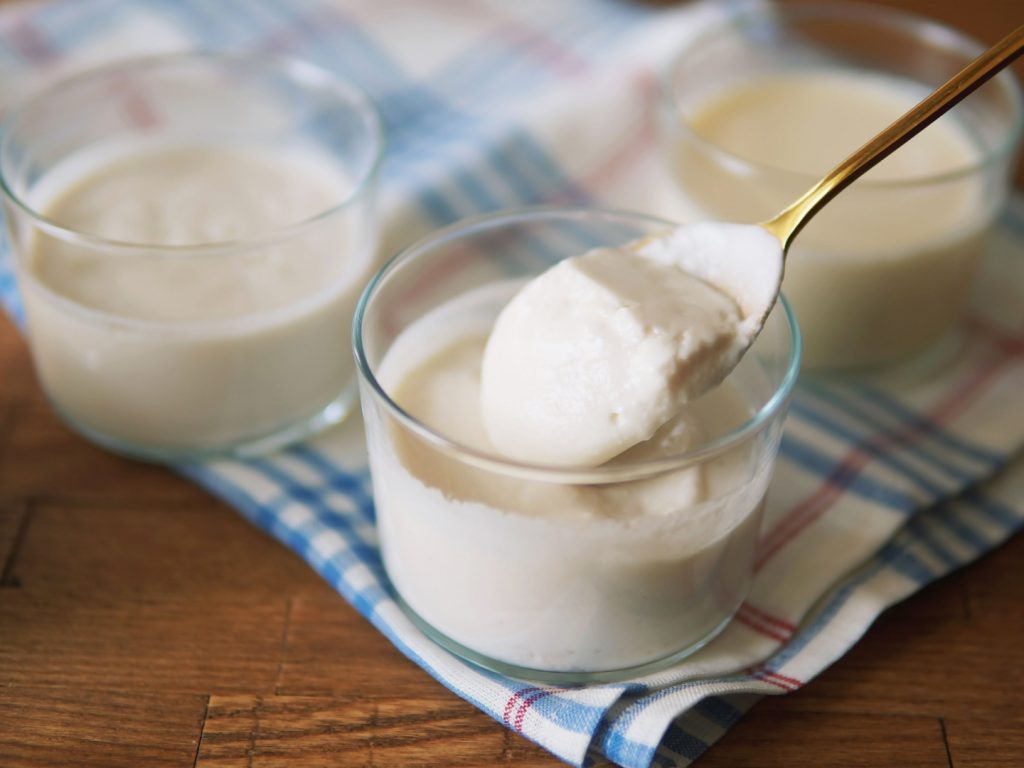
- Local Yogurt: Creamy and refreshing, a popular choice among locals.
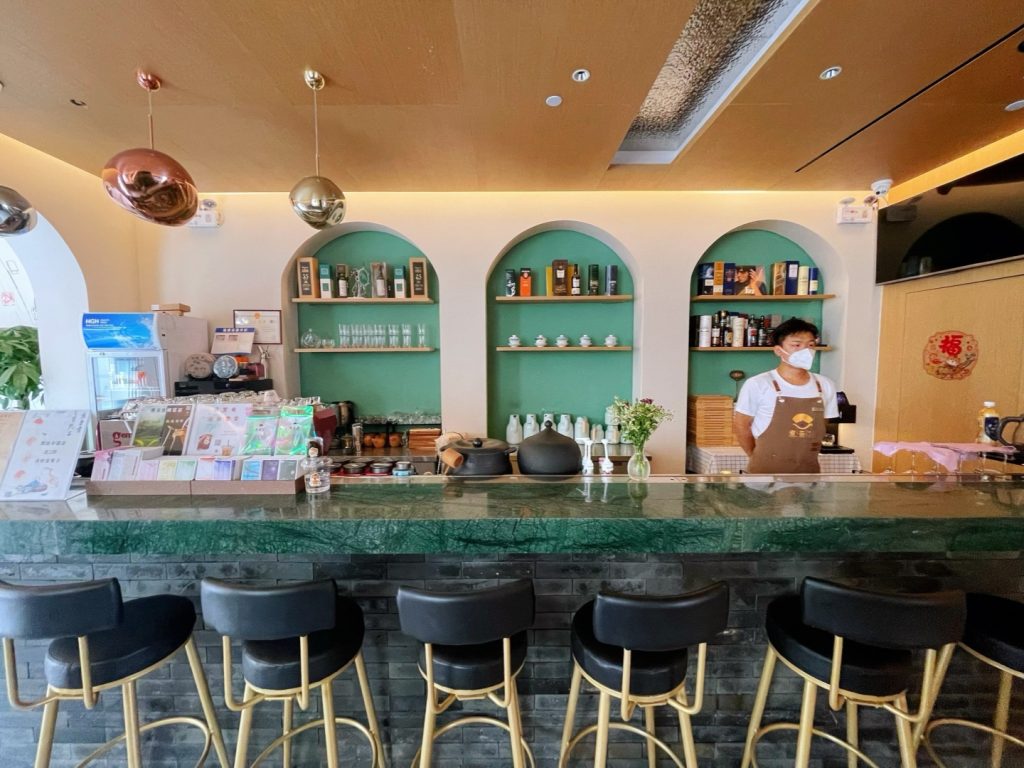
- Tea Houses and Indie Cafes: Cozy places to rest, enjoy a warm drink, and soak in the hutong atmosphere.
Recommended Route for Exploring the Four Beijing Hutongs
For a smooth and enjoyable experience, follow this suggested route through some of the best hutongs in Beijing. This plan helps you explore beijing hutongs in a simple and relaxing way.
1. Nanluoguxiang: Trendy Meets Traditional
Start your tour in Nanluoguxiang, a lively hutong that combines old Beijing charm with modern shops and cafés. Walk through the narrow lanes, browse boutiques, and enjoy street snacks.
2. Wudaoying Hutong: Quiet & Artistic Retreat
Next, head to Wudaoying Hutong. This area is quieter and full of art studios, boutique shops, and cozy tea houses. It’s a great spot to experience local creativity and relax away from crowds.
3. Yandai Xiejie: Old Beijing’s Cultural Lane
Then visit Yandai Xiejie, a historic lane with traditional architecture and cultural vibes. Enjoy a leisurely stroll, try local street food, and soak in the atmosphere of old Beijing.
4. Shichahai Hutongs: Scenic & Lively
Finish your route at Shichahai Hutongs, famous for its scenic lake views and vibrant nightlife. Walk along the waterfront, see historic courtyards, and enjoy bars or cafés as the evening sets in.
Visiting Beijing hutongs is more than sightseeing—it’s about feeling Beijing’s true rhythm. These lanes are where Beijing traditional life still continues. You don’t need to rush from one spot to another. Slow down, walk into a quiet side lane, stop for a cup of tea, and chat with an elder about the old days.