Liziba Station: Train Through Buildings in Chongqing
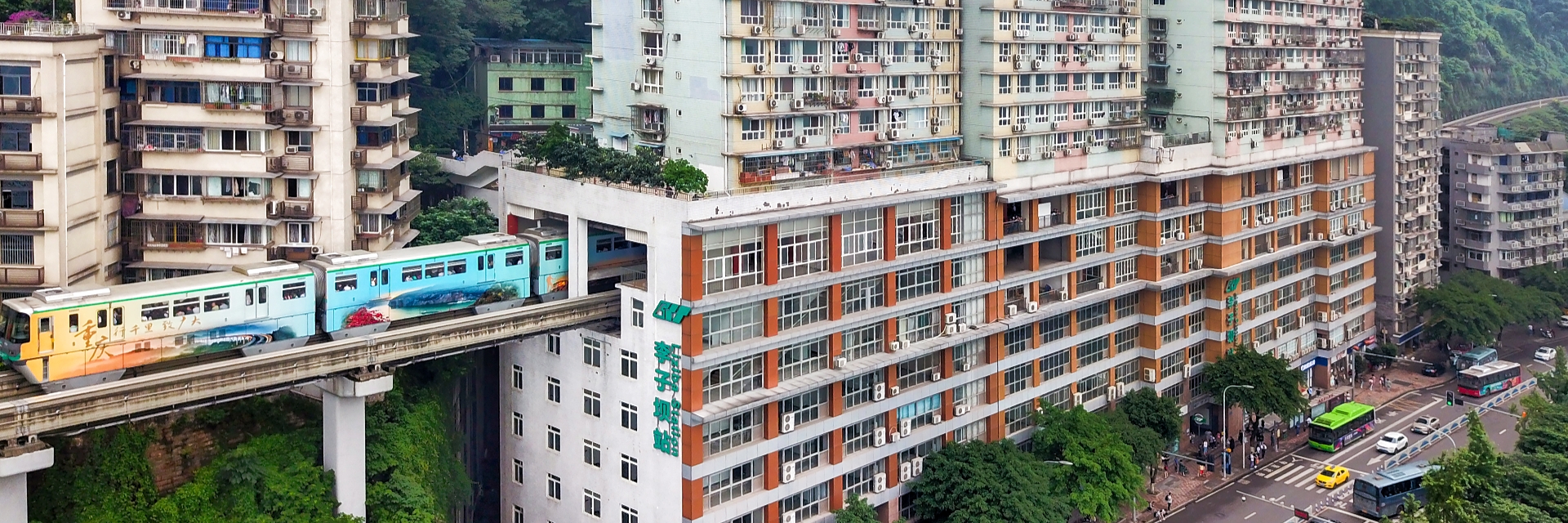
If you have seen photographs of a train disappearing into a high-rise building in Chongqing, you have probably seen Liziba Station (李子坝站). Located on Chongqing Rail Transit Line 2 beside the Jialing River, Liziba is one of the city’s most recognizable urban landmarks.
What makes it unusual is not simply that a train passes through a building. The station was designed together with a mixed-use building on a steep and tightly developed site, allowing the railway, shops, offices, and homes to share the same limited space. The result is a working monorail station that looks almost unreal from the street.
For first-time visitors to Chongqing, Liziba is easy to combine with the city’s old streets, river views, historic sites, and nearby day trips.
What Makes Liziba Station So Special?
Liziba Station is a remarkable example of how Chongqing adapted transportation infrastructure to its mountainous geography. Rather than treating the city’s steep terrain and limited flat land as obstacles, engineers incorporated the monorail directly into the existing urban landscape. The result is a station where a train appears to pass straight through a residential building—a solution that has become one of Chongqing’s most recognizable sights.
An Architecture Marvel
Liziba Station is a remarkable example of how Chongqing adapted transportation infrastructure to its mountainous geography.
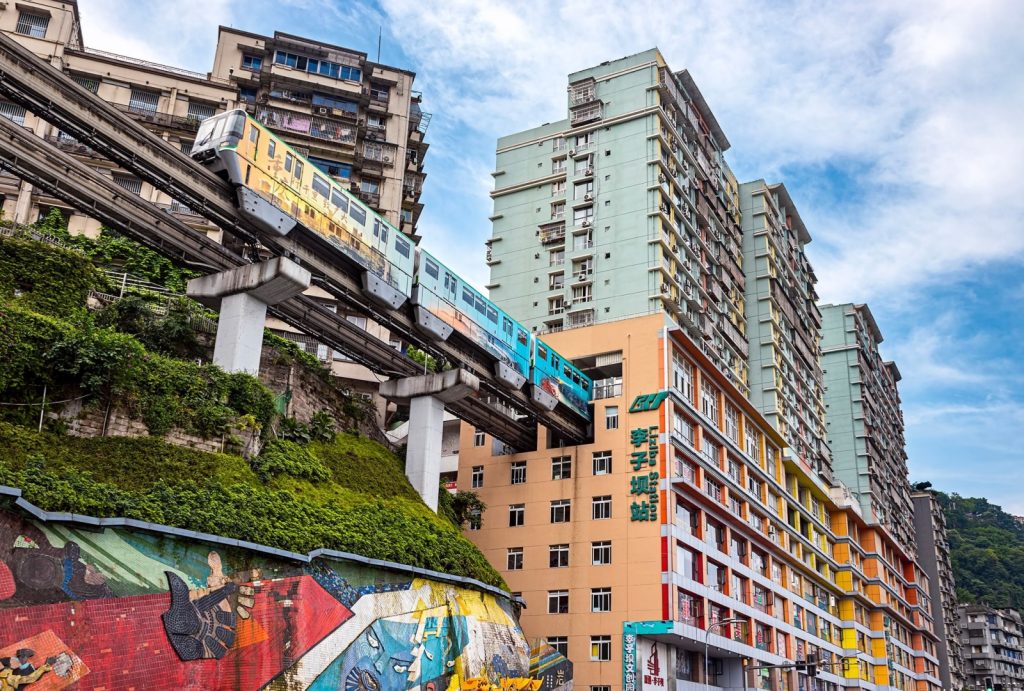
Liziba Station was designed in 1998 and completed in March 2004. It occupies part of a commercial and residential building at No. 39 Liziba Street. According to the Chongqing municipal government, it was the first elevated straddle-type monorail station in China to be built together with a commercial-residential building.
The building and railway may appear to be one structure, but they are not simply carrying the same structural load. Engineers used a station-and-bridge separation design, with the main structural systems of the building and rail infrastructure independently arranged. This helped address vibration, noise, safety, and structural-load issues.
This is particularly important in Chongqing because flat land is limited. The city is built across hills, valleys, cliffs, and riverbanks, so conventional railway construction can require extensive bridges, tunnels, or land clearance.
Instead of moving the building or moving the railway somewhere else, engineers made them work together.
Monorail Through Buildings & Chongqing History
Liziba also helps explain why Chongqing’s transportation system looks so different from that of many other Chinese cities.
Line 2 uses straddle-type monorail technology, in which the train runs on a concrete beam. Chongqing selected this type of system partly because it works well with the city’s steep terrain, tight curves, and densely developed urban areas.
Line 2 became China’s first urban monorail and the first rail transit line in western China.
The famous train-through-building view became internationally popular much later, especially after photographs and videos spread across social media. But Liziba was not built as a tourist attraction. It was designed as part of Chongqing’s everyday transportation network.
That is what makes the experience interesting:
- when you stand on the viewing platform, you are watching a normal commuter train enter a functioning station
- when you ride Line 2 through Liziba, the strange appearance from outside becomes surprisingly ordinary from inside the train.
Best Time to Go
Liziba Station can be visited throughout the year, but spring and autumn are generally comfortable for walking around Chongqing. September and October can be particularly pleasant for combining Liziba with outdoor sightseeing, although weather can still be warm in early autumn.
For photography, morning or late afternoon usually provides softer natural light than the middle of the day. If your main goal is to photograph the train entering the building, allow enough time for several trains rather than arriving for only one.
The viewing platform is free to access, so you do not need to purchase an attraction ticket to see the famous scene. The platform has dedicated photography areas and provides a clearer view of the entire building and railway.
Important for visitors in 2026: Liziba Station is undergoing a major renovation in stages. The official schedule says that different parts of the station, including sections of the platforms, entrances and station halls, are being closed temporarily, with the overall project expected to continue until December 30, 2026. Follow temporary signs and staff instructions at the station.
How to Get There
Getting to Liziba Station is straightforward:
- By Metro: The easiest way is to take Chongqing Metro Line 2 and get off directly at Liziba Station. This also lets you experience the famous “train through building” phenomenon as a passenger.
- By Bus: Several bus routes, including 465 and 871, stop near Liziba Station.
- By Taxi/Rideshare: Taxis and rideshares are available, but traffic can be heavy in Chongqing. The metro is often faster, especially during peak hours.
- On Foot: If you’re exploring the Jiefangbei CBD, Liziba Station is about a 20-minute taxi ride away. Walking is also possible, but the route can take longer because of Chongqing’s steep and hilly streets.
How to Fully Experience Liziba Station?
There are 3 main ways to fully experience the uniqueness of Liziba Station:
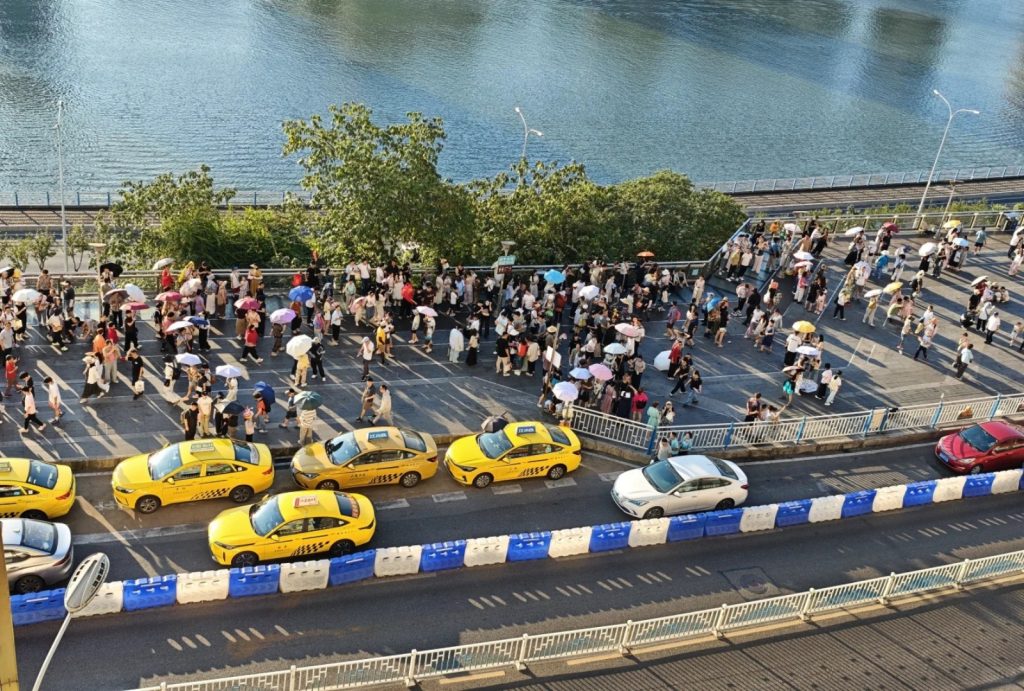
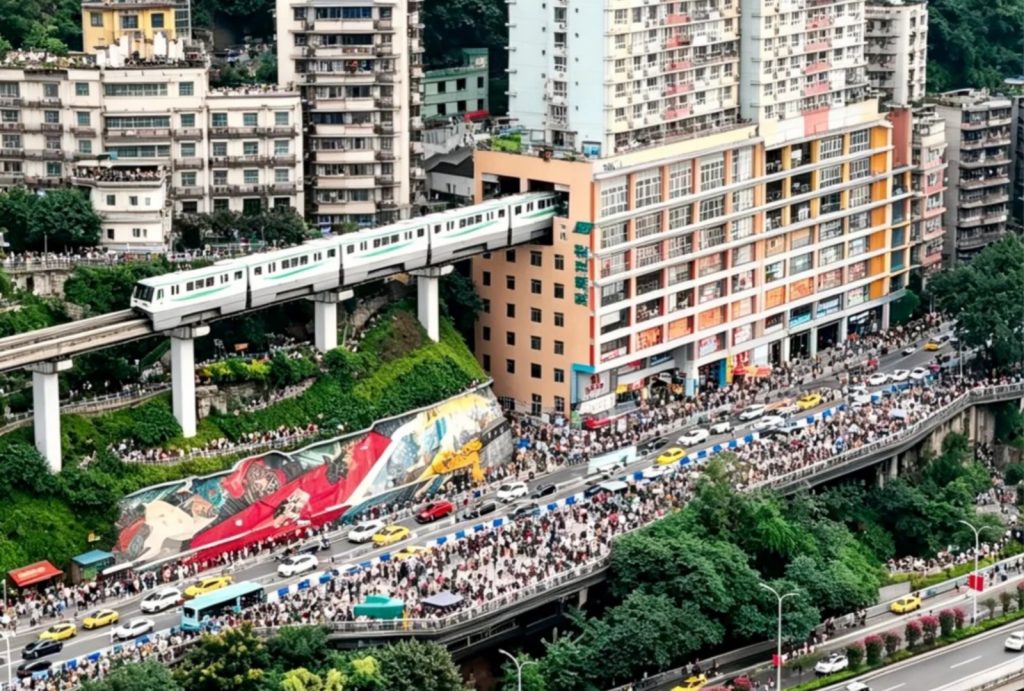
From the Viewing Platform
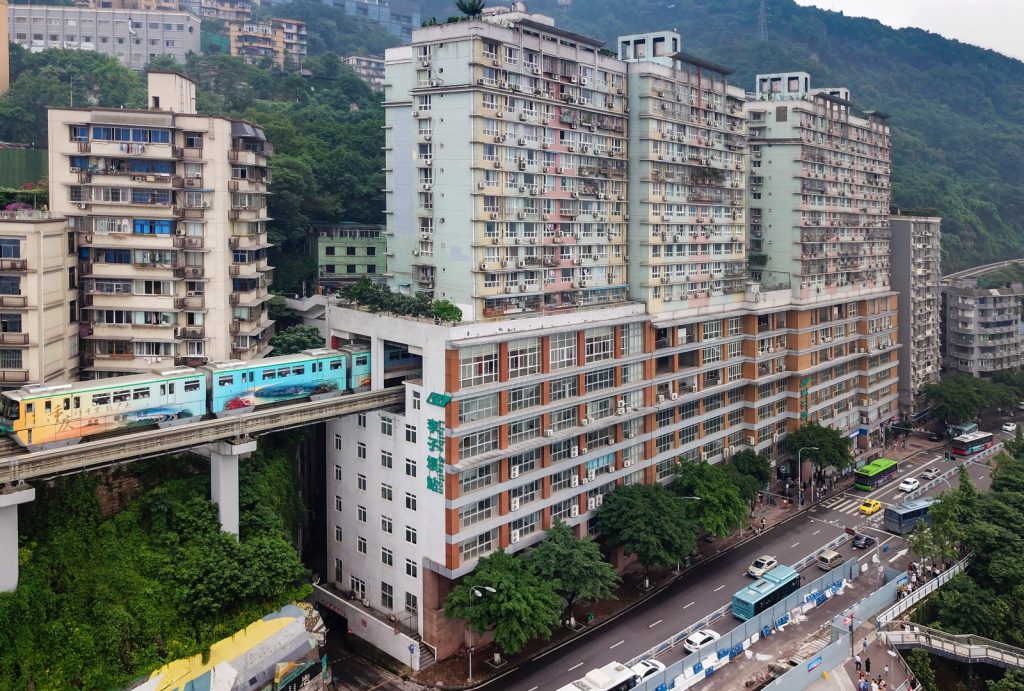
Directly across from the station, you’ll find a dedicated viewing platform, which is ideal for capturing photos and videos of the monorail as it enters and exits the Zhushangheyi Building. This spot offers an unbeatable view of this architectural marvel, set against Chongqing’s dynamic, multi-layered cityscape.
By Riding the Monorail
For a truly immersive experience, hop on Line 2 and ride through Liziba Station. As the train glides through the 6th to 8th floors of the residential building, you’ll get an up-close view of this unique design. The ride also offers scenic views of the Jialing River and stunning city vistas, making it a must-do experience for anyone visiting Chongqing.
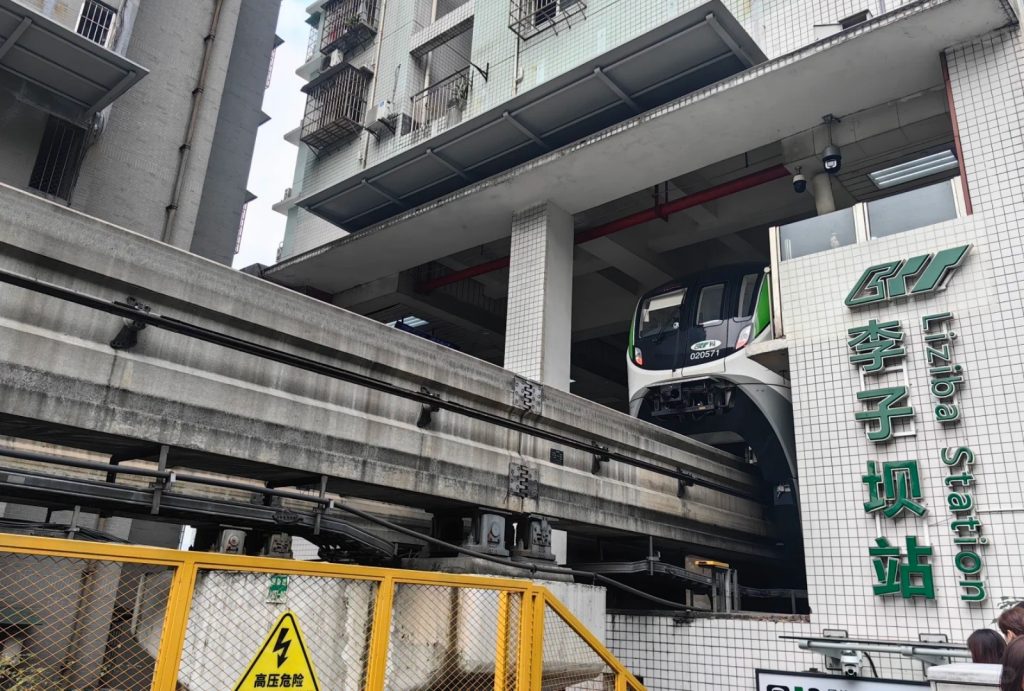
At the Entrance of Liziba Station
The entrance area of Liziba Station gives you a clear view of the station’s modern and functional design. This area is also an excellent spot to capture the fusion of traditional and contemporary elements that define Chongqing’s skyline. The busy surroundings add to the urban atmosphere, showing the station’s place in the heart of the city.
Attractions Near Liziba
Liziba is located in Yuzhong District, so several major Chongqing attractions can be combined in the same day.
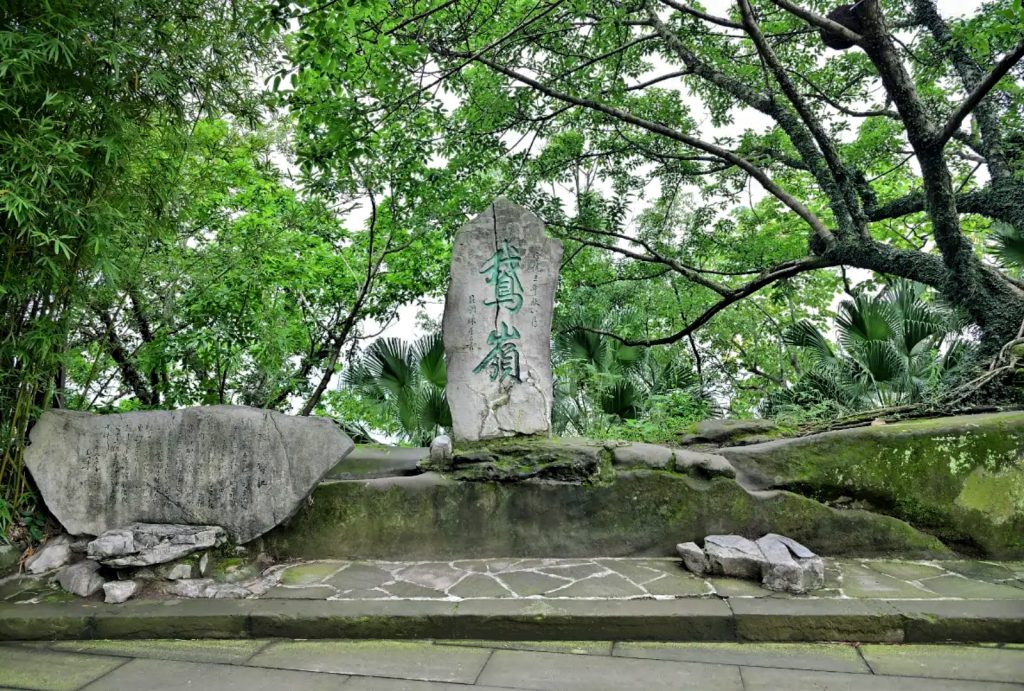
Nearby places include Eling Park, Testbed 2, Fotuguan, the Jialing River, and historic neighborhoods. These attractions show a different side of Chongqing, with steep streets, old buildings, creative spaces, parks, and elevated viewpoints.
Line 2 also makes Liziba easy to combine with Chongqing Zoo, which is on the same line.
2 Days Chongqing Adventure Tour : Downtown City and Wulong Karst Geological Park
For travelers who prefer scenery and geology, combine Chongqing with Wulong Karst.
- Spend the first day visiting central Chongqing and Liziba Station.
- On the second day, travel to Wulong to see the Three Natural Bridges and other karst landscapes.
Wulong Karst forms part of the South China Karst World Natural Heritage and is known for dramatic natural bridges, sinkholes, caves, cliffs, and valleys. The Three Natural Bridges are among its best-known landscapes.
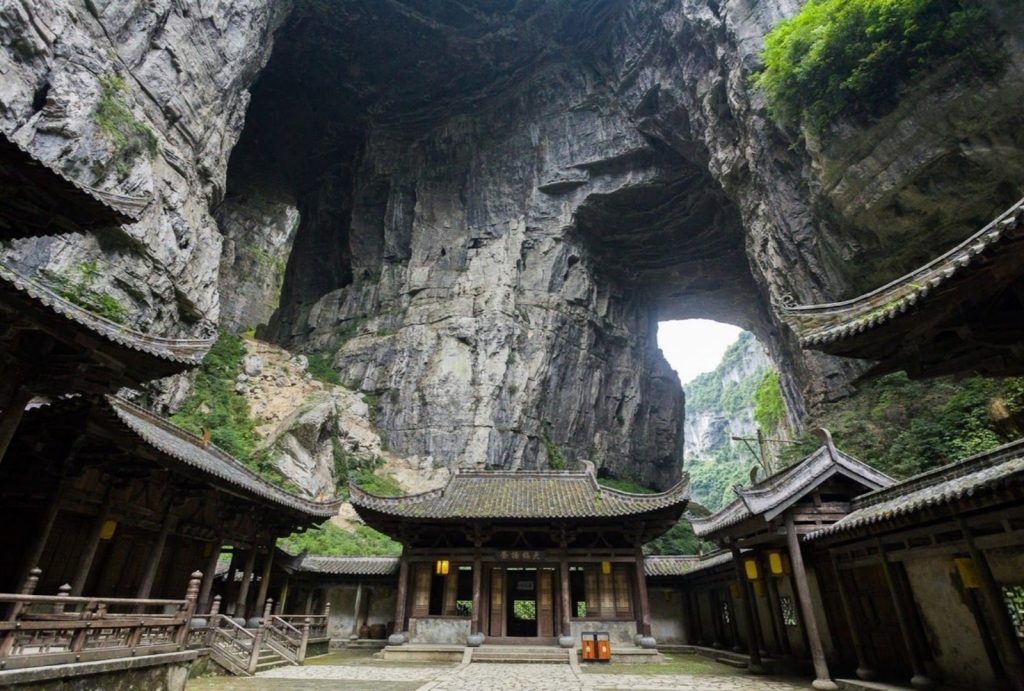
Wulong is around 129 km from central Chongqing, so it is better treated as a full-day excursion rather than a quick stop.
3 Days Chongqing Classic Tour: Downtown City and Dazu Rock Carvings
Liziba works well as part of a 3-day Chongqing classic tour.
Day 1: Chongqing Downtown
Visit Jiefangbei, Hongyadong, Kuixinglou, and other central landmarks. In the evening, enjoy Chongqing’s illuminated skyline and riverside views.
Day 2: Liziba and Chongqing’s western city area
Start with Liziba Station and ride Line 2 through the building. Continue to nearby hillside attractions and old urban neighborhoods before returning toward central Chongqing.
Day 3: Dazu Rock Carvings
Take a day trip to the Dazu Rock Carvings, a UNESCO World Heritage Site. The carvings contain more than 50,000 statues and inscriptions and represent Buddhist, Taoist, and Confucian traditions. The site was added to the World Heritage List in 1999.
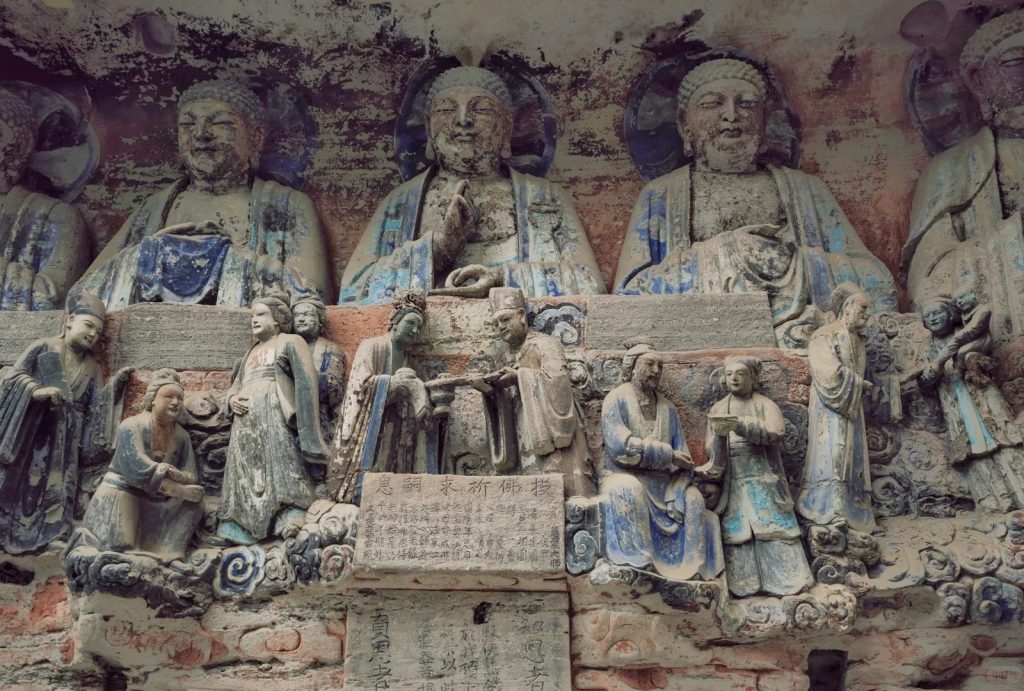
This combination gives travelers both modern Chongqing engineering and centuries-old Chinese religious art.
4 Days Chengdu & Chongqing Highlights Tour : Pandas & Hongya Cave
If you have four days, Liziba can form part of a Chengdu and Chongqing itinerary.
- Begin in Chengdu with a visit to the giant pandas and the city’s historic neighborhoods.
- Then travel to Chongqing for two days of urban sightseeing.
In Chongqing, combine Liziba Station, Hongya Cave, Jiefangbei, and the city’s riverside areas. Liziba provides the engineering and transportation story, while Hongya Cave offers a very different view of Chongqing’s traditional hillside architecture and night scenery.
This route works particularly well for first-time visitors because Chengdu provides China’s giant pandas and Sichuan culture, while Chongqing adds mountain-city landscapes, dramatic urban infrastructure, and the famous train-through-building experience.
❓Frequently Asked Questions
When is the best time to take photos at Liziba Station?
The best time to take photos is usually during daylight hours on a clear day. To avoid crowds, try visiting on a weekday outside the morning (7–9 AM) and evening (5–7 PM) rush hours. Evenings can also offer dramatic shots when the train and city lights are illuminated.
Is there an entrance fee for Liziba Station?
There is no entrance fee to visit Liziba Station or the public viewing area. The viewing platform is free to access.
How long should I spend at Liziba Station?
Most visitors can spend around 30–60 minutes at Liziba Station. This gives you enough time to visit the viewing platform, take photos of the train passing through the building, and, if you wish, ride the monorail through the station.
Where are the best positions to take photos of Liziba Station?
The Liziba viewing platform offers the best overall view of the station and the train passing through the building. For a different perspective, you can also take photos from the surrounding streets or riverside areas. For the most recognizable shot, position yourself where you can see both the train and the building clearly.